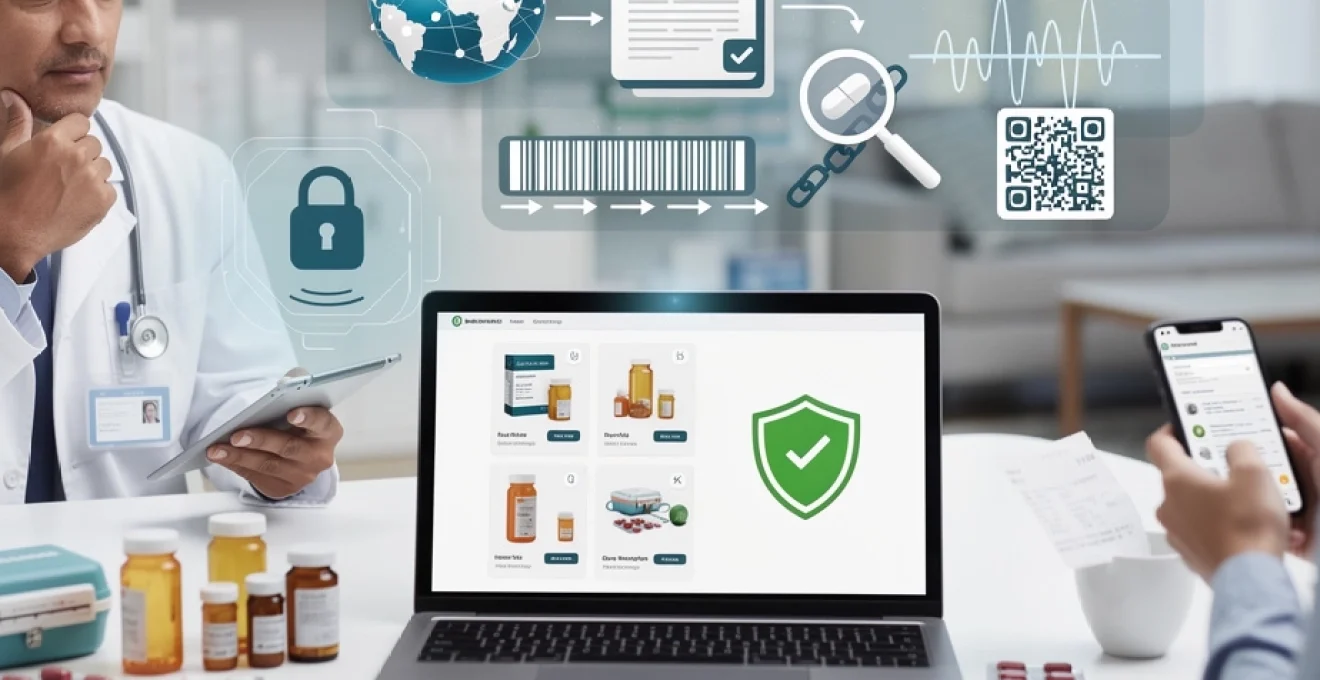
The digital revolution has transformed how we access healthcare services, with online pharmacies emerging as a convenient alternative to traditional brick-and-mortar establishments. This shift has been accelerated by technological advances, changing consumer expectations, and recent global events that highlighted the need for accessible healthcare solutions. However, the rise of digital pharmaceutical services has also introduced new challenges and concerns regarding patient safety, medication authenticity, and regulatory compliance.
Understanding the safety landscape of online pharmacies requires examining multiple layers of protection, from regulatory frameworks to technological safeguards. While legitimate online pharmacies offer genuine benefits including convenience, privacy, and often competitive pricing, the digital marketplace has also become a breeding ground for fraudulent operations selling counterfeit or dangerous medications. This complex environment demands informed decision-making from consumers who must navigate between legitimate healthcare providers and potentially harmful illegal operations.
Regulatory framework and licensing requirements for online pharmacy operations
The foundation of online pharmacy safety rests upon robust regulatory frameworks that govern digital healthcare operations. These comprehensive systems establish minimum standards for pharmaceutical distribution, patient safety protocols, and professional accountability measures. Regulatory bodies across different jurisdictions have developed sophisticated oversight mechanisms to ensure that online pharmacies maintain the same rigorous standards as traditional dispensaries.
MHRA registration standards and good distribution practice guidelines
The Medicines and Healthcare products Regulatory Agency (MHRA) serves as the primary regulatory authority for pharmaceutical operations within the United Kingdom, establishing stringent requirements for online pharmacy operations. Licensed online pharmacies must demonstrate compliance with Good Distribution Practice (GDP) guidelines, which encompass everything from storage conditions and temperature monitoring to staff qualifications and quality management systems. These regulations ensure that medications maintain their integrity throughout the supply chain, from manufacturer to patient.
MHRA registration involves rigorous assessment of physical facilities, even for primarily online operations. Pharmacies must maintain appropriate storage conditions, implement robust inventory management systems, and establish clear protocols for handling controlled substances. The agency conducts regular inspections and maintains ongoing monitoring of licensed operators to ensure continued compliance with evolving safety standards.
EU falsified medicines directive compliance for Cross-Border transactions
The European Union’s Falsified Medicines Directive represents one of the most comprehensive approaches to combating counterfeit medications in online commerce. This directive mandates sophisticated authentication systems for prescription medications, including unique identifiers and tamper-evident features on packaging. For cross-border transactions within the European Economic Area, these requirements create additional layers of verification that help protect patients from dangerous counterfeit products.
Compliance with the directive requires online pharmacies to integrate with central verification systems that can authenticate medication packages in real-time. This technological infrastructure represents a significant investment for legitimate operators but provides crucial protection against the infiltration of fake medicines into the legitimate supply chain.
General pharmaceutical council registration verification systems
The General Pharmaceutical Council (GPhC) maintains the official register of pharmacies and pharmacists in Great Britain, providing consumers with a reliable mechanism for verifying the legitimacy of online pharmacy operations. The GPhC’s internet pharmacy logo scheme offers visual confirmation of legitimate status, displaying a distinctive logo that links directly to the official register for verification purposes.
Registered online pharmacies must meet the same professional standards as traditional pharmacies, including requirements for qualified pharmacist supervision, appropriate patient counselling services, and maintenance of professional indemnity insurance. The GPhC’s disciplinary procedures ensure that any violations of professional standards result in appropriate sanctions, protecting public safety through accountability measures.
FDA approval processes for international online pharmacy platforms
While the Food and Drug Administration primarily regulates the United States pharmaceutical market, its policies significantly impact international online pharmacy operations, particularly those serving American consumers or utilizing American-manufactured medications. The FDA’s Verified Internet Pharmacy Practice Sites (VIPPS) program, administered through the National Association of Boards of Pharmacy, provides additional verification mechanisms for legitimate online pharmacy operations.
International platforms seeking to serve multiple markets must navigate complex regulatory requirements across different jurisdictions. This often involves obtaining multiple licenses, implementing jurisdiction-specific safety protocols, and maintaining compliance with varying standards for patient data protection and medication handling.
Authentication mechanisms and verification protocols for legitimate online dispensaries
Modern online pharmacies employ sophisticated authentication systems designed to verify both the legitimacy of prescriptions an
and the identity of the dispensing pharmacy. These verification protocols help ensure that only authorised healthcare professionals can issue prescriptions and that medicines are supplied safely and appropriately.
Digital certificate authentication through NABP VIPPS accreditation
For consumers in North America, one of the most reliable ways to assess whether an online pharmacy is safe is through accreditation schemes such as the National Association of Boards of Pharmacy (NABP) Verified Internet Pharmacy Practice Sites (VIPPS) or its newer digital pharmacy accreditations. These programmes act like a digital “seal of approval”, confirming that a website has been independently assessed against strict professional and technical standards. When you see the official VIPPS or NABP accreditation seal, you can usually click it to verify that it links back to the NABP website, rather than being a copied image.
Accredited online pharmacies must demonstrate compliance with state and federal pharmacy laws, appropriate storage and shipping practices, secure handling of prescriptions and robust systems for protecting patient data. They are also evaluated on aspects such as pharmacist availability for consultation, complaint handling and transparency around physical address and ownership. Because an estimated 90%+ of online pharmacy sites worldwide operate outside accepted standards, using VIPPS accreditation as a filter can help you quickly narrow down which platforms are likely to be legitimate.
Prescription validation systems and electronic health record integration
A core safety feature of any reputable online pharmacy is a rigorous prescription validation system. Legitimate sites will always require a valid prescription for prescription-only medicines, either uploaded as a paper prescription, transmitted electronically from your doctor, or generated following a structured online consultation with a licensed prescriber. If an online pharmacy offers powerful medicines, such as antibiotics, opioids or erectile dysfunction drugs, without asking for a prescription or health questionnaire, this is a major red flag.
More advanced online pharmacies integrate with electronic health records (EHRs) or national electronic prescription services to streamline and secure the process. This integration allows prescribers to send prescriptions directly to the pharmacy, reduces the risk of forgery, and helps prevent duplication or dangerous drug interactions. In some health systems, pharmacies can view elements of your medication history (with consent), which means they can flag potential problems such as overlapping therapies, allergies or high-risk combinations. This kind of joined-up prescribing and dispensing is one of the main reasons why buying medication from a regulated online pharmacy is far safer than using unverified websites.
Pharmacist consultation requirements and telepharmacy regulations
Another important hallmark of a trustworthy online dispensary is access to a qualified pharmacist for advice and counselling. In many jurisdictions, regulators require that online pharmacies offer real-time or near-real-time consultation options, whether by telephone, secure chat or video. This ensures that you can ask questions about side effects, dosing, storage, interactions or what to do if you miss a dose, just as you would in a community pharmacy. It also allows the pharmacist to refuse or adjust a supply if your answers raise safety concerns.
Telepharmacy regulations set out how these remote consultations should be delivered, how pharmacists must verify your identity, and how records of advice must be documented. For example, there may be limits on which medicines can be supplied following an online-only assessment, or requirements for follow-up with your usual doctor. Have you ever wondered why reputable sites ask what other medicines you are taking, or about your medical history? It is because they are required to carry out a basic clinical check before dispensing, rather than simply acting as a mail-order warehouse.
Secure socket layer encryption standards for patient data protection
When you share sensitive health and payment information online, robust technical protections are critical. Legitimate online pharmacies use Secure Socket Layer (SSL) or its modern equivalent, Transport Layer Security (TLS), to encrypt data transmitted between your device and their servers. You can usually confirm this by checking for “https://” in the website address and a padlock icon in your browser’s address bar. Without encryption, personal details, prescription information and payment data could potentially be intercepted by cybercriminals.
Beyond SSL/TLS, reputable platforms implement wider cybersecurity measures such as secure hosting, firewalls, multi-factor authentication for staff, and strict access controls on medical records. They must also comply with data protection laws such as GDPR in Europe or HIPAA in the United States, which set rules on how your health information can be stored, used and shared. In practice, this means that a safe online pharmacy should clearly explain its privacy policy, obtain your consent where required, and never share or sell your data to third parties for marketing without explicit permission.
Pharmaceutical supply chain integrity and cold chain management
Even if an online pharmacy is properly licensed, the safety of your medication also depends on the integrity of the supply chain behind it. A secure pharmaceutical supply chain ensures that medicines move only through authorised wholesalers and distributors, with documented handovers at each stage. This reduces the risk that counterfeit, stolen or tampered products can be mixed in with genuine stock. Regulators such as the MHRA, FDA and Health Canada regularly inspect wholesalers and logistics providers to verify compliance with Good Distribution Practice, including security, record-keeping and recall procedures.
Cold chain management is especially important for medications that must be kept within a specific temperature range, such as many vaccines, certain insulin products and some biological therapies. If these medicines become too warm or too cold during transport, they may lose potency or become unsafe. A reputable online pharmacy will use validated packaging, temperature-controlled transport where required and, in some cases, temperature indicators in the parcel. Think of it like shipping fresh food: if it arrives warm when it should be chilled, you would not eat it. The same principle applies to temperature-sensitive medicines.
Tracking systems, barcodes and scanning at each handover point help pharmacies confirm that the product you receive has come directly from an authorised manufacturer or wholesaler and has been handled correctly. If you are ordering medication that requires refrigeration, you should always check how the pharmacy will ship it and what happens if there is a delay. Many trusted providers use express delivery services, insulated packaging and may even restrict shipping on certain days to avoid your parcel sitting in a depot over the weekend.
Risk assessment frameworks for counterfeit medication detection
Counterfeit medicines remain one of the biggest threats when buying medication online. To combat this, regulators and legitimate pharmacies use structured risk assessment frameworks to detect suspicious products and suppliers before they reach patients. These frameworks consider factors such as unusual pricing, atypical packaging, missing safety features, inconsistent batch numbers or unexpected supply patterns. Pharmacies are expected to investigate anomalies and, where necessary, quarantine stock while they report concerns to authorities.
For consumers, understanding how these detection systems work can help you make safer choices. If an online pharmacy is selling prescription medicines at a fraction of usual prices, ships internationally without restrictions, or offers “miracle cures” without scientific backing, it is sensible to assume a higher risk of counterfeits. By contrast, pharmacies that openly describe their sourcing, publish their regulatory registrations and follow strict prescription rules are far less likely to be involved in illicit supply chains.
Spectroscopic analysis methods for drug authentication verification
At the more technical end of counterfeit detection, regulators, manufacturers and some large pharmacy chains employ laboratory-based techniques such as spectroscopic analysis to verify drug authenticity. Methods like Raman spectroscopy, near-infrared (NIR) spectroscopy and mass spectrometry allow experts to “fingerprint” a medicine’s chemical composition without necessarily destroying the sample. When the measured spectrum matches the reference profile for a genuine product, it provides strong evidence that the medicine is authentic.
How does this help you as a patient? While you will not be performing spectroscopy at home, these tools support surveillance programmes that test random samples from the supply chain or investigate suspicious products reported by pharmacies and patients. It is similar to quality checks in the food industry, where random testing of products helps keep the overall system safe. The existence of these analytical methods makes it harder for counterfeiters to operate undetected and provides another layer of assurance when you use a regulated online pharmacy.
Serialisation technology and track-and-trace implementation
Serialisation and track-and-trace systems have become central components of global efforts to combat falsified medicines. Under regulations such as the EU Falsified Medicines Directive and the US Drug Supply Chain Security Act (DSCSA), most prescription medicine packs now carry a unique serial number encoded in a 2D barcode, along with product code, batch number and expiry date. When a pack is manufactured, its serial number is uploaded to a central database, and each subsequent movement through the supply chain can be recorded.
When you collect a prescription from an online or traditional pharmacy, the pharmacist can scan this 2D barcode to verify that the pack’s serial number is valid, has not been dispensed before and has not been flagged as stolen or recalled. This is like scanning a boarding pass at an airport gate: if the code has already been used or is not recognised, the system will raise an alert. For cross-border online pharmacy operations, serialisation provides an extra barrier against diversion and enables faster recalls if a safety issue is detected with a particular batch or product.
Blockchain-based pharmaceutical provenance documentation
In recent years, there has been growing interest in using blockchain technology to enhance transparency and trust in the pharmaceutical supply chain. Blockchain acts as a distributed digital ledger where each transaction or movement of a medicine can be recorded in an immutable, time-stamped way. Because entries cannot easily be altered or deleted, it becomes much harder for bad actors to falsify records or hide illicit diversions of stock.
While most blockchain projects in this area are still at pilot or early implementation stages, they illustrate how future online pharmacy safety might evolve. Imagine being able to scan a code on your medicine and see a secure, verifiable record of every step from manufacturer to your doorstep. For now, you are unlikely to encounter blockchain directly as a consumer, but it is worth knowing that forward-looking regulators and companies are exploring this technology as part of broader efforts to make buying medication online safer and more transparent.
Clinical safety protocols and adverse drug reaction monitoring
Beyond ensuring that the product is genuine and well handled, safe online pharmacies must also support clinical safety by monitoring for adverse drug reactions (ADRs) and medication errors. Pharmacists are trained to identify high-risk combinations, inappropriate doses and potential contraindications based on the information you provide. When you complete an online questionnaire, honest and complete answers are essential: they are not just administrative hurdles but critical tools for assessing whether a medicine is safe for you.
In many countries, pharmacists and prescribers are required to report serious or unexpected side effects to national pharmacovigilance systems, such as the MHRA’s Yellow Card Scheme in the UK, the FDA’s MedWatch in the US or Health Canada’s MedEffect. These reports feed into large safety databases that are continuously analysed for patterns. If a new risk emerges, regulators can issue warnings, update product information or, in rare cases, withdraw a medicine from the market. You can usually report suspected side effects yourself as well, either directly to the regulator or via your online pharmacy, which should provide clear instructions or links.
Have you ever noticed safety leaflets or emails from pharmacies reminding you to watch out for specific symptoms when starting a new medicine? These are part of wider risk minimisation measures and clinical safety protocols. Reputable online pharmacies may also use automated flags in their systems to prompt additional checks when dispensing certain high-risk drugs, such as anticoagulants, opioids or isotretinoin. By combining human professional judgement with digital safety nets, they aim to reduce the chances of harm even when the interaction happens entirely online.
Consumer protection mechanisms and legal recourse pathways
Finally, an important aspect of assessing whether online pharmacies are safe and reliable is understanding what happens if something goes wrong. In regulated markets, consumers benefit from multiple layers of protection, including professional oversight, insurance, consumer law and regulatory complaint systems. If you receive the wrong medication, experience serious side effects that were not properly warned about, or suspect that a pharmacy is operating illegally, you have avenues to seek redress and help prevent harm to others.
Most pharmacy regulators maintain formal complaint procedures that allow you to report concerns about a pharmacist, a prescriber or a pharmacy business. Depending on the jurisdiction, you may also be able to contact consumer protection agencies, medical boards or data protection authorities if your personal information has been mishandled. In cases involving counterfeit or unauthorised medicines purchased online, specialist bodies such as Health Canada, the MHRA or the FDA can investigate, seize products and work with law enforcement to shut down illegal operations. Where financial loss or injury has occurred, civil legal action may be an option, often supported by legal advice or patient advocacy organisations.
From a practical perspective, you can protect yourself by keeping records of orders, prescriptions, emails and any advice you receive from an online pharmacy. Check that the website clearly displays its physical address, regulatory registration numbers and contact details, and be wary of sites that hide behind anonymous email forms or international PO boxes. If a deal looks too good to be true, or a site offers prescription-only medicines without any medical input, it is almost always safer to walk away. By combining regulatory safeguards with informed consumer choices, we can enjoy the convenience of online pharmacies while minimising the risks associated with buying medication on the internet.