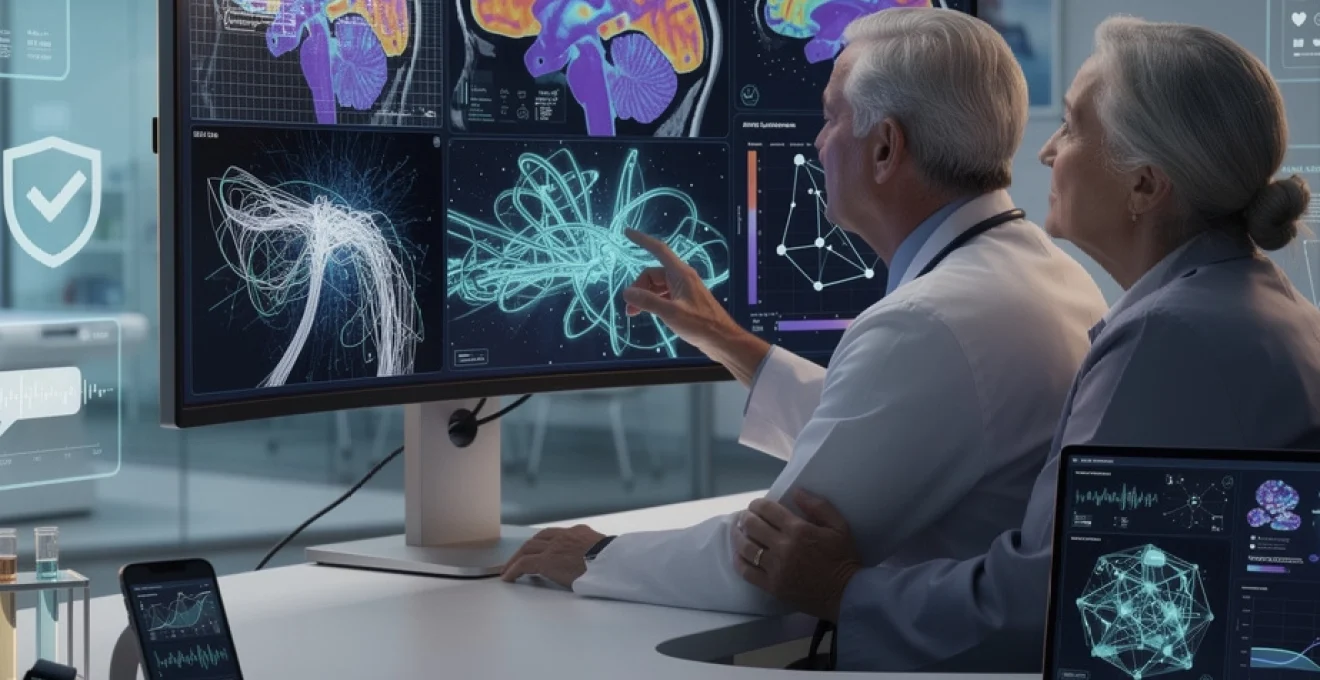
The battle against Alzheimer’s disease has reached a pivotal moment where artificial intelligence is transforming diagnostic capabilities from reactive to predictive medicine. With over 55 million people worldwide living with dementia and costs exceeding $820 billion annually, the urgency for early detection has never been greater. Recent breakthroughs demonstrate that AI can predict Alzheimer’s development up to seven years before symptoms appear, offering unprecedented opportunities for intervention when treatments may be most effective. This technological revolution promises to address one of healthcare’s most pressing challenges: identifying cognitive decline before irreversible damage occurs.
Machine learning algorithms in alzheimer’s detection: neural networks and deep learning approaches
Machine learning algorithms represent the computational backbone of modern Alzheimer’s detection systems, offering sophisticated pattern recognition capabilities that surpass traditional diagnostic methods. These algorithms excel at identifying subtle biomarkers and cognitive patterns that human clinicians might overlook during routine assessments. The complexity of Alzheimer’s disease, with its heterogeneous presentation across different individuals, makes it an ideal candidate for AI-driven analysis that can process vast amounts of multidimensional data simultaneously.
Deep learning architectures have emerged as particularly powerful tools for early Alzheimer’s detection, utilising multiple layers of neural networks to extract increasingly complex features from patient data. These systems can integrate information from diverse sources including neuroimaging, cognitive assessments, genetic markers, and electronic health records to create comprehensive risk profiles. The Cambridge University research demonstrates that machine learning models can achieve 82% accuracy in identifying individuals who will develop Alzheimer’s within three years, significantly outperforming traditional clinical markers.
Convolutional neural networks for MRI brain scan analysis
Convolutional neural networks (CNNs) have revolutionised the analysis of medical imaging data, particularly in detecting subtle brain changes associated with early Alzheimer’s disease. These networks excel at identifying spatial patterns in neuroimaging data that indicate grey matter atrophy, hippocampal volume changes, and other structural abnormalities preceding cognitive symptoms. Advanced CNN architectures can process high-resolution MRI scans to quantify volumetric changes with precision that exceeds human radiological assessment.
The application of CNNs to structural MRI analysis enables automated detection of disease-specific patterns across multiple brain regions simultaneously. Recent implementations have shown remarkable success in distinguishing between healthy ageing and pathological changes, with some systems achieving diagnostic accuracy rates exceeding 90% when combined with clinical assessments. These networks can identify subtle cortical thinning patterns and white matter changes that serve as early biomarkers for Alzheimer’s progression.
IBM watson health AI platform for cognitive assessment
IBM Watson Health’s artificial intelligence platform represents a comprehensive approach to cognitive assessment, integrating natural language processing with clinical data analysis to enhance diagnostic accuracy. The platform processes vast amounts of unstructured medical data, including physician notes, test results, and patient histories, to identify patterns indicative of cognitive decline. Watson’s ability to analyse speech patterns, cognitive test responses, and behavioural changes provides clinicians with multifaceted insights into patient cognitive status.
The system’s machine learning algorithms continuously improve through exposure to diverse patient populations and clinical outcomes, enhancing their predictive capabilities over time. Clinical validation studies have demonstrated that Watson-assisted diagnoses show improved accuracy compared to traditional assessment methods alone, particularly in identifying mild cognitive impairment that may progress to dementia.
Support vector machines in biomarker pattern recognition
Support vector machines (SVMs) offer exceptional performance in biomarker pattern recognition for Alzheimer’s detection, excelling at classification tasks involving complex, high-dimensional datasets. These algorithms create optimal decision boundaries between different diagnostic categories by mapping patient data into higher-dimensional spaces where separation becomes more achievable. SVMs demonstrate particular strength in analysing protein biomarker combinations, genetic variants, and neuropsychological test patterns that collectively indicate disease risk.
The robustness of SVM algorithms makes them especially valuable for handling noisy medical data and managing the inherent variability in biological measurements. Research applications have shown SVMs achieving classification accuracies exceeding 85% when analysing cerebrospinal fluid biomarkers and blood-based protein signatures associated with Alzheimer’s pathology.
Recurrent neural networks for longitudinal patient data processing</h3
Recurrent neural networks (RNNs) extend AI’s capabilities by analysing longitudinal patient data, such as repeated clinic visits, serial cognitive tests, and ongoing electronic health record entries. Unlike traditional models that treat each data point in isolation, RNNs are designed to understand sequences and temporal patterns, making them ideal for tracking how memory scores, daily functioning, or imaging markers change over months or years. This temporal awareness allows them to distinguish between normal age-related decline and trajectories that are more suggestive of early Alzheimer’s disease.
More advanced variants like Long Short-Term Memory (LSTM) networks and Gated Recurrent Units (GRUs) help overcome the usual limitations of standard RNNs, such as forgetting information from earlier time points. In practical terms, this means an AI system can use your entire history of cognitive assessments, blood tests, and imaging results to create a personalised risk curve rather than relying on a single snapshot. Studies using RNN-based approaches have shown improved accuracy in predicting which patients with mild cognitive impairment will convert to Alzheimer’s dementia within a defined window, often three to five years. For clinicians, this longitudinal forecasting supports better planning of follow-up intervals, treatment decisions, and conversations with patients and families about what to expect.
Neuroimaging technologies: PET scans, MRI, and advanced brain imaging for early diagnosis
Neuroimaging is at the heart of early Alzheimer’s detection, and artificial intelligence is dramatically enhancing what we can see and interpret from brain scans. Traditional imaging provides detailed pictures of brain structure and function, but AI can uncover subtle, complex patterns that are invisible to the human eye. By combining modalities like MRI, PET, and diffusion imaging, AI systems build a multi-layered view of the brain’s health, from microscopic changes in white matter to the accumulation of toxic proteins.
Because Alzheimer’s pathology can begin decades before symptoms, early brain imaging biomarkers are crucial for predictive models. AI algorithms trained on thousands of scans learn to recognise the earliest signatures of amyloid plaques, tau tangles, and network connectivity changes associated with the disease. This is where artificial intelligence really shines: it can fuse these diverse signals into a single, interpretable risk score that supports earlier, more confident diagnosis of Alzheimer’s disease and helps determine who might benefit from emerging disease-modifying therapies.
Amyloid PET imaging with pittsburgh Compound-B tracer detection
Amyloid PET imaging using tracers such as Pittsburgh Compound-B (PiB) allows clinicians to visualise amyloid-beta plaques directly in the living brain. These plaques are one of the hallmark features of Alzheimer’s disease and often accumulate long before memory problems arise. The challenge is that PiB-PET scans generate large, complex datasets, and manually interpreting subtle regional differences in tracer uptake can be time-consuming and subjective.
AI-based image analysis tools can automatically segment the brain, quantify tracer uptake in predefined regions, and compare results against large normative databases. Machine learning models then classify scans as amyloid-positive or amyloid-negative and can even estimate how far along in the amyloid accumulation process a person might be. In some research settings, AI-driven analysis of PiB-PET has achieved high sensitivity and specificity for detecting preclinical Alzheimer’s disease, helping to identify individuals who appear cognitively normal but carry a significantly elevated risk.
Diffusion tensor imaging for white matter microstructural changes
Diffusion Tensor Imaging (DTI) is an MRI technique that measures how water molecules move along white matter tracts, revealing microstructural integrity of the brain’s communication highways. In early Alzheimer’s disease, these white matter pathways can begin to deteriorate before large-scale atrophy becomes visible on conventional MRI. However, DTI produces multiple metrics and complex maps that are not straightforward to interpret in a routine clinical setting.
Machine learning algorithms, including support vector machines and deep learning models, have been applied to DTI data to identify characteristic patterns of white matter disruption associated with early Alzheimer’s. These systems can detect subtle reductions in fractional anisotropy and increases in mean diffusivity across specific tracts linked to memory and executive function. Think of it like checking the wiring inside a building: even before walls crumble, AI can pick up early fraying of the cables, providing a powerful diffusion-based biomarker for disease prediction and progression monitoring.
Functional MRI connectivity analysis in default mode networks
Functional MRI (fMRI) tracks changes in blood oxygenation to infer brain activity and connectivity between regions over time. One of the key networks studied in Alzheimer’s research is the default mode network (DMN), which is involved in memory, self-referential thinking, and daydreaming. Disruptions in DMN connectivity have been repeatedly linked to early Alzheimer’s disease, sometimes appearing before noticeable cognitive symptoms.
AI approaches, particularly graph-based deep learning and clustering algorithms, can map and quantify functional connections across the entire brain. By analysing resting-state fMRI data, these models identify abnormal patterns in how the DMN interacts with other networks. For example, reduced connectivity between the posterior cingulate cortex and hippocampus can serve as an early functional biomarker. As we move toward personalised neurology, fMRI connectivity profiles processed with AI may help determine which individuals are on an Alzheimer’s-like trajectory and who is more likely to remain cognitively stable.
Tau protein visualisation using AV-1451 PET radiotracer technology
While amyloid plaques may appear early, tau tangles are often more closely related to symptom severity and clinical progression in Alzheimer’s disease. PET radiotracers like AV-1451 (also known as flortaucipir) allow direct visualisation of tau accumulation in specific brain regions. The spatial pattern of tau uptake—starting in the medial temporal lobe and spreading to association cortices—is a critical clue for staging the disease and predicting future decline.
Artificial intelligence enhances tau PET by automating region-of-interest analysis and modelling the spread of pathology over time. Deep learning algorithms can integrate tau PET with structural MRI and cognitive data to produce highly granular prognostic models. For instance, an AI system might determine that a certain combination of medial temporal tau burden and hippocampal atrophy predicts rapid conversion from mild cognitive impairment to dementia. By treating tau PET images like a dynamic map of disease progression, AI makes it easier for clinicians to anticipate future changes and select the right moment to intervene.
Digital biomarkers and wearable technology: smartphone apps and continuous monitoring systems
Beyond hospitals and imaging centres, artificial intelligence is moving Alzheimer’s detection into everyday life through digital biomarkers and wearable technology. Instead of relying solely on annual clinic visits, we can now capture continuous data on how people move, sleep, speak, and solve problems in their natural environments. This shift is transformative: subtle changes that might be missed in a 20-minute appointment can become visible when you track patterns over weeks and months.
Digital biomarkers for Alzheimer’s disease include cognitive performance in app-based games, speech tempo and word choice, walking speed, sleep efficiency, and even typing patterns. AI models analyse these signals to flag early deviations from a person’s baseline or from age-matched norms. It’s a bit like having a “check engine” light for brain health—quietly running in the background, and only raising an alert when something changes in a meaningful way. For individuals worried about memory loss, this kind of passive monitoring can offer reassurance or prompt earlier evaluation when it truly matters.
Cambridge brain sciences cognitive assessment platform integration
Platforms such as Cambridge Brain Sciences (CBS) provide web-based and app-based cognitive assessments that measure domains like memory, reasoning, attention, and verbal skills. These tasks are short, engaging, and can be repeated regularly, making them ideal for tracking cognitive changes over time. When integrated with AI analytics, the detailed performance data from CBS tests can act as a highly sensitive digital biomarker for early cognitive decline.
Machine learning models examine not only raw scores but also response times, error patterns, and learning curves across repeated sessions. For example, a gradual decline in working memory performance or increasing variability in reaction times may signal emerging neurodegenerative changes. By aggregating data from thousands of users worldwide, AI systems can build robust normative curves, making it easier to spot when an individual’s trajectory starts to diverge. In clinical practice, this integration supports remote monitoring of at-risk patients and can help prioritise who needs further in-person assessment or brain imaging.
Actigraphy data analysis for sleep-wake cycle disruption detection
Actigraphy uses wearable sensors—often resembling simple wristwatches—to measure movement and infer sleep-wake patterns. Sleep disruption and fragmented circadian rhythms are increasingly recognised as early warning signs of Alzheimer’s disease, sometimes appearing before obvious memory problems. However, raw actigraphy data are noisy and complex, making it challenging to interpret without specialised tools.
AI algorithms can clean, segment, and classify actigraphy data to provide a detailed view of sleep architecture and daytime activity levels. Pattern recognition techniques identify features such as reduced sleep efficiency, increased night-time awakenings, and irregular activity rhythms that correlate with elevated dementia risk. From a practical perspective, this means a low-cost wearable device on your wrist, combined with AI analysis, can serve as a window into brain health—alerting clinicians when sleep patterns shift in ways that might merit further cognitive evaluation.
Speech pattern analysis using natural language processing algorithms
Our speech carries a wealth of information about cognitive health, from the words we choose to the structure and rhythm of our sentences. Natural Language Processing (NLP), a branch of AI, enables automated analysis of spoken or written language to detect subtle features associated with early Alzheimer’s disease. These may include increased pauses, word-finding difficulties, reduced vocabulary richness, or simplified sentence structures.
AI-driven speech analysis tools can be integrated into phone calls, virtual assistants, or dedicated assessment apps. Over time, NLP models build a personalised linguistic profile and look for gradual deviations that might indicate cognitive decline. For example, a person might start using more generic words (“thing,” “stuff”), rely on shorter sentences, or struggle with coherent storytelling. By quantifying these patterns, AI can provide clinicians with objective, longitudinal language biomarkers to complement traditional memory tests. This raises an important question: could your everyday conversations with a digital assistant one day double as an early screening test for Alzheimer’s disease?
Gait analysis through apple watch and fitbit accelerometer data
Changes in walking speed, stride length, and balance can offer early clues about neurological health, including Alzheimer’s disease and other dementias. Modern wearables like Apple Watch and Fitbit contain accelerometers and gyroscopes that continuously measure motion, often without any effort from the user. These devices collect rich streams of gait data during ordinary activities—walking to the shop, climbing stairs, or taking an evening stroll.
Machine learning algorithms process this sensor data to derive digital gait biomarkers, such as variability in step timing, asymmetry between legs, and changes in turning speed. Research suggests that increased variability and slowing of gait may precede cognitive symptoms and predict higher dementia risk. By analysing these patterns at scale, AI systems can generate personalised mobility baselines and flag concerning changes. Imagine your smartwatch not only counting steps but also quietly watching for early motor signatures of cognitive decline and prompting you—or your clinician—when something looks off.
Clinical validation studies: FDA-approved AI tools and regulatory frameworks
For AI tools in Alzheimer’s detection to move from the lab into everyday practice, rigorous clinical validation and clear regulatory pathways are essential. Health authorities such as the U.S. Food and Drug Administration (FDA), the UK’s Medicines and Healthcare products Regulatory Agency (MHRA), and the European Medicines Agency (EMA) are increasingly evaluating AI-based diagnostics. These regulators require robust evidence that tools are safe, effective, and perform reliably across diverse patient populations, not just in controlled research settings.
One notable example is BrainSee, an AI system cleared by the FDA in 2024 to predict the likelihood of Alzheimer’s progression using brain scans and clinical data. In validation studies, BrainSee was able to stratify patients with mild cognitive impairment according to their risk of developing Alzheimer’s dementia within five years, offering clinicians a standardised risk estimate. Similarly, multi-centre trials in the UK and Europe are testing AI pipelines that combine blood biomarkers, cognitive tests, and imaging to support memory clinic decision-making, often in parallel with existing diagnostic workflows to compare outcomes directly.
Regulatory frameworks are also evolving to address the unique challenges of adaptive AI systems that learn over time. Agencies are exploring concepts like “predetermined change control plans,” which outline how models can be updated without compromising safety or requiring full re-approval for every modification. For clinicians and patients, this careful oversight matters: it ensures that AI tools used for early detection of Alzheimer’s disease are not black boxes but well-characterised medical devices with transparent performance metrics, known limitations, and clear instructions for use.
Neurofilament light chain and CSF protein analysis: AI-powered laboratory diagnostics
Laboratory biomarkers, particularly neurofilament light chain (NfL) and cerebrospinal fluid (CSF) proteins, are becoming central to early Alzheimer’s detection. NfL is a structural protein released into CSF and blood when neurons are damaged, and elevated levels have been linked to neurodegeneration across multiple conditions, including Alzheimer’s. CSF biomarkers such as amyloid-beta, total tau, and phosphorylated tau provide a direct glimpse into the molecular processes driving disease. The challenge is integrating these different markers—and their complex interactions—into a coherent diagnostic picture.
AI-powered analytics address this by modelling non-linear relationships between multiple biomarkers and clinical outcomes. Machine learning algorithms take as input the levels of NfL, various CSF proteins, genetic risk factors like APOE4, and demographic information to estimate an individual’s risk of current or future Alzheimer’s disease. For instance, a model might learn that a particular pattern—slightly elevated NfL, low amyloid-beta, and high p-tau—strongly predicts progression from mild cognitive impairment to dementia within a specific time frame. By turning raw lab values into clinically actionable risk scores, AI helps laboratories and clinicians interpret complex biomarker panels more accurately and consistently.
Importantly, research groups are extending these methods to blood-based tests, which are less invasive than lumbar punctures and easier to implement at scale. AI can help correct for confounding factors such as kidney function, comorbid illnesses, and medication use that may influence biomarker levels in the bloodstream. Combined with low-cost, AI-enhanced biosensors—like the handheld devices developed at the University of Liverpool for phosphorylated tau 181 detection—this approach could make advanced biomarker testing for Alzheimer’s as routine as a cholesterol check. The promise is clear: a small blood sample, analysed by AI, offering an early warning system for neurodegenerative disease.
Challenges in AI implementation: data privacy, algorithm bias, and healthcare integration barriers
Despite the impressive potential of artificial intelligence for early Alzheimer’s detection, several real-world challenges must be addressed before these tools can be widely adopted. Data privacy is a central concern: AI models often rely on large volumes of sensitive information, including brain scans, genetic data, and detailed health records. Patients and clinicians need strong guarantees that this data will be stored securely, anonymised where possible, and not misused for purposes beyond agreed research or clinical care. Regulations such as GDPR in Europe and HIPAA in the United States provide legal frameworks, but implementing them correctly in complex AI pipelines is an ongoing task.
Algorithmic bias is another critical issue. If AI systems are trained primarily on data from certain groups—such as people of European ancestry, urban populations, or those with higher education—they may perform poorly in underrepresented communities. In the context of Alzheimer’s disease, this could mean missed diagnoses or inaccurate risk predictions for individuals from minority ethnic backgrounds or rural areas, inadvertently widening existing health disparities. To counter this, researchers are increasingly focusing on diverse, representative training datasets, transparent reporting of model performance across subgroups, and continuous post-deployment monitoring to detect and correct bias.
Finally, integrating AI into everyday healthcare workflows can be surprisingly difficult. Clinicians are already pressed for time, and adding new tools that generate extra dashboards or alerts can create “alarm fatigue” if not carefully designed. Electronic health record systems may not easily accommodate AI outputs, and reimbursement models often lag behind technological innovation. Successful implementation requires more than just good algorithms; it demands user-friendly interfaces, clear explanations of how risk scores are generated, and training for healthcare professionals on when and how to act on AI-generated insights.
So where does this leave us? AI for early Alzheimer’s detection is moving rapidly from theoretical promise to practical reality, but its impact will depend on thoughtful deployment. If we can solve challenges around privacy, bias, and integration, these technologies could shift dementia care from late-stage crisis management to proactive, personalised prevention and early intervention. In other words, artificial intelligence will not replace clinicians—but it could become one of the most powerful tools they have to protect brain health long before symptoms appear.