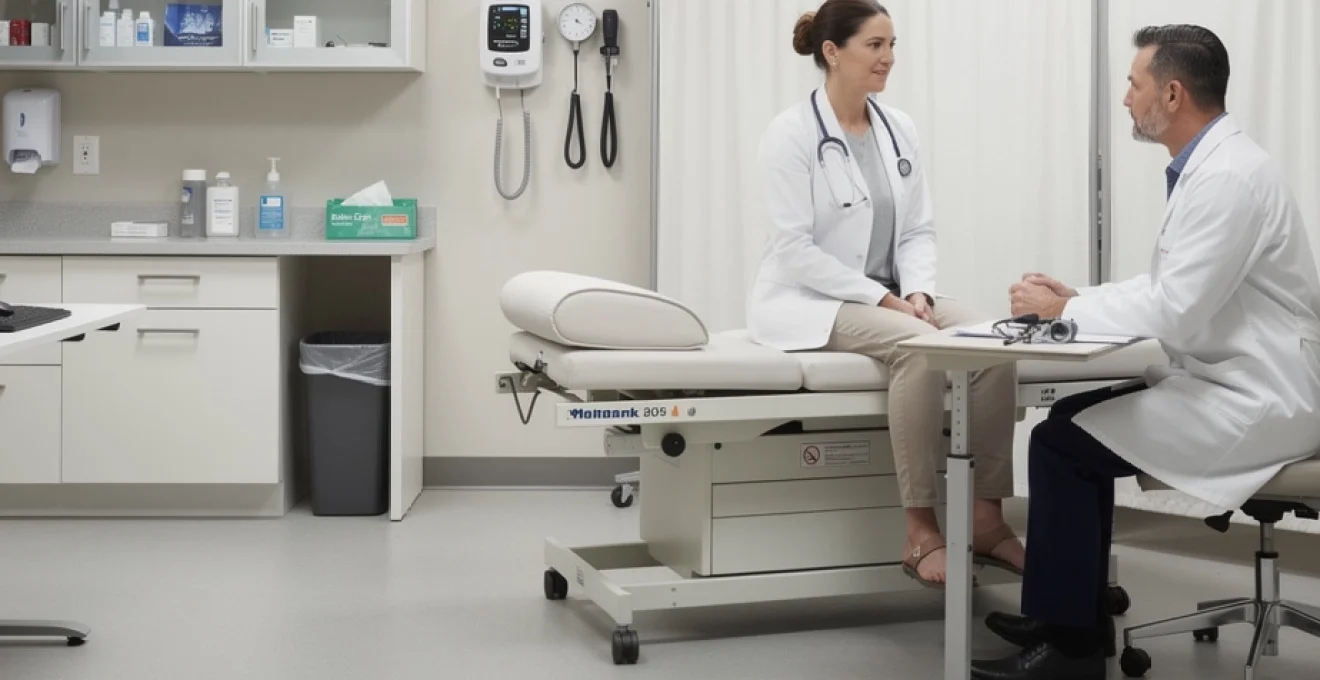
Setting up a properly equipped examination room represents one of the most critical investments in any medical practice’s success. Modern healthcare delivery demands spaces that seamlessly blend clinical functionality with patient comfort, whilst ensuring compliance with evolving safety standards and technological requirements. The configuration of medical examination rooms directly impacts clinical outcomes, practice efficiency, and patient satisfaction scores, making strategic equipment selection and spatial planning essential for sustainable healthcare delivery.
Healthcare facilities face mounting pressure to optimise their physical environments as patient expectations rise and regulatory requirements become increasingly stringent. The examination room serves as the primary point of care delivery, where diagnostic accuracy, treatment efficacy, and patient experience converge. Proper equipment selection and room configuration can reduce consultation times by up to 25% whilst simultaneously improving diagnostic accuracy and patient throughput.
Essential medical equipment selection for primary care examination rooms
The foundation of any examination room lies in its core diagnostic equipment, which must balance clinical accuracy with operational efficiency. Modern primary care facilities require a comprehensive array of instruments that support evidence-based medicine whilst maintaining cost-effectiveness. Equipment selection should prioritise reliability, ease of maintenance, and integration capabilities with existing healthcare technology systems.
Diagnostic accuracy depends heavily on the quality and calibration of medical instruments. Research indicates that properly maintained and strategically positioned equipment can improve diagnostic precision by up to 30% compared to poorly organised or outdated alternatives. Investment in high-quality diagnostic tools represents a crucial factor in maintaining clinical standards and patient safety protocols.
Digital sphygmomanometers vs manual blood pressure monitors
Blood pressure monitoring equipment selection significantly impacts both clinical accuracy and workflow efficiency. Digital sphygmomanometers offer automated readings with reduced operator dependency, making them particularly valuable in high-volume practices where staff productivity matters. These devices typically provide consistent measurements across different operators, reducing inter-observer variability that can affect patient care decisions.
Manual sphygmomanometers, whilst requiring greater operator skill, remain the gold standard for blood pressure measurement accuracy. They offer tactile feedback and auditory cues that experienced practitioners value for detecting irregular heartbeats or other cardiovascular abnormalities. The choice between digital and manual systems should consider staff training levels, patient volume, and specific clinical requirements of the practice.
Welch allyn PanOptic ophthalmoscope integration requirements
Ophthalmoscopic examination capabilities require careful consideration of both equipment specifications and mounting systems. The Welch Allyn PanOptic ophthalmoscope represents advanced diagnostic technology that provides enhanced visualisation of the retina through its unique optical design. Integration requirements include appropriate wall-mounting systems that ensure stability whilst maintaining easy access during examinations.
Proper ophthalmoscope positioning should consider both seated and standing examination positions, with mounting heights typically ranging between 48-52 inches from floor level.
The positioning of ophthalmoscopic equipment directly affects examination quality and practitioner ergonomics, influencing both diagnostic accuracy and long-term occupational health.
Power supply considerations and maintenance access should also factor into installation planning.
Littmann cardiology IV stethoscope positioning systems
Stethoscope storage and positioning systems must balance accessibility with infection control requirements. The Littmann Cardiology IV stethoscope, recognised for its superior acoustic performance, requires dedicated storage solutions that prevent cross-contamination whilst ensuring immediate availability during patient encounters. Wall-mounted holders should incorporate antimicrobial materials and facilitate easy cleaning protocols.
Strategic positioning of stethoscope systems should consider the typical flow of physical examination, placing them within easy reach of both the examination table and physician seating areas. Optimal positioning reduces unnecessary movement during consultations, improving efficiency whilst maintaining sterile handling procedures throughout patient care delivery.
Heine beta 400 otoscope wall mount configurations
Otoscopic examination equipment requires robust mounting systems that accommodate frequent use whilst maintaining precision calibration. The Heine Beta 400 otoscope system demands specific mounting configurations that support its advanced fibre-optic technology and rechargeable power systems. Wall-mount installations should incorporate charging capabilities and speculum dispensing systems for optimal workflow integration.
Positioning of otoscope wall mounts should follow similar ergonomic principles to ophthalmoscopic systems, typically aligning at 48-52 inches from floor level to accommodate both seated and standing examinations. Cable management and infection prevention measures must be integrated from the outset, ensuring that charging cords, handle holders, and speculum containers are easy to clean and do not create trip hazards. Practices should standardise otoscope mounting locations across all examination rooms to reduce cognitive load on clinicians and locum staff, supporting consistent primary care workflows. When properly configured, the Heine Beta 400 otoscope wall mount becomes a central component of efficient ear, nose, and throat assessment within a modern examination room.
Clinical furniture layout and ergonomic positioning standards
Beyond diagnostic equipment, the way clinical furniture is laid out in an examination room profoundly influences workflow, ergonomics, and patient safety. Poorly placed examination tables, stools, and storage units can add minutes to each consultation and increase the risk of musculoskeletal injuries for clinicians. Adhering to evidence-based ergonomic positioning standards helps ensure that examination rooms support high patient throughput without compromising practitioner health or patient comfort. A structured approach to furniture placement also simplifies staff training and enables consistent room setup across multi-physician practices.
Ergonomic design in examination rooms should be treated much like the layout of a well-organised operating theatre: every item has a defined place and purpose. By applying clear positioning guidelines to the Midmark 204 examination table, physician rolling stools, storage cabinets, and privacy screens, you create an intuitive environment that clinicians can navigate almost on autopilot. This reduces unnecessary movement, improves infection control, and helps you deliver a more predictable, high-quality patient experience.
Midmark 204 examination table placement guidelines
The Midmark 204 examination table is a common choice in primary care due to its reliability, integrated storage, and adaptability to a wide range of clinical procedures. Optimal placement typically involves positioning the table so that clinicians can access both sides of the patient without obstruction, while maintaining a clear 36-inch minimum circulation path for wheelchair users and staff. Many practices find that angling the examination table at 30–45 degrees from the wall, rather than placing it directly against it, provides better access and visual privacy.
Where possible, the head of the Midmark 204 should be oriented away from the door to enhance patient privacy when the door opens. The distance from the examination table to fixed cabinetry or walls should allow the clinician to stand or sit comfortably at the head, side, and foot of the table without twisting or overreaching. Think of the examination table as the central “workstation” in your clinical space: all frequently used diagnostic tools – such as wall-mounted otoscopes, ophthalmoscopes, and blood pressure devices – should be reachable within two to three steps to optimise examination room efficiency.
Physician rolling stool height adjustment protocols
Rolling stools are often overlooked, yet they are critical to long-term clinician ergonomics and occupational health. Improper stool height can lead to chronic back, neck, and shoulder strain, particularly in high-volume primary care clinics. Basic protocols recommend that when seated, the clinician’s feet are flat on the floor, knees are at approximately 90–100 degrees, and the hips are slightly higher than the knees to maintain a neutral lumbar curve. This positioning helps reduce spinal loading during repeated examinations throughout the day.
Stools used in examination rooms should feature smooth-rolling casters, 360-degree swivel capability, and easy pneumatic height adjustment to support rapid transitions between patient encounters. Establishing a standard “starting height” for each examination room, along with brief staff training on adjustment techniques, can minimise setup time for each consultation. From a safety perspective, it is essential that rolling stools are positioned so they do not obstruct access to the examination table or emergency exits, yet remain within arm’s reach of the primary charting or examination zone.
Medical storage cabinet accessibility compliance
Medical storage cabinets must balance security, accessibility, and regulatory compliance, particularly in practices where controlled substances, sharps, and injectable medications are stored in examination rooms. Best practice guidelines recommend placing high-use items – such as dressings, gloves, and commonly used disposable equipment – between 32 and 48 inches from floor level, which corresponds to the ergonomic “golden zone” for most adults. Less frequently required items can be stored higher or lower, provided they remain clearly labelled and safely secured.
To comply with accessibility standards such as the ADA, cabinet handles should be easy to grip and operable with one hand, requiring minimal strength. Doors should open without encroaching on wheelchair turning zones or obstructing transfer to the examination table. Consistent internal organisation across cabinets in all exam rooms – for example, always keeping wound care supplies in the same drawer position – significantly reduces time spent searching for items, especially for locums or new staff. Lockable compartments should be clearly designated for prescription pads, vaccines, or controlled medications, aligning with local regulatory requirements.
Patient privacy screen positioning requirements
Patient privacy screens play a vital role in maintaining dignity and confidentiality during examinations and procedures, particularly in busy primary care environments. Whether you use ceiling-mounted curtains, portable folding screens, or fixed partitions, positioning should allow patients to change clothing or prepare for examination without being visible from the doorway. A common approach involves creating a discrete “dressing zone” between the door and the examination table, with the screen forming a visual barrier even if the door is opened unexpectedly.
Privacy screens should not interfere with access to emergency equipment, hand hygiene stations, or primary circulation routes. Portable screens must be stable yet easy to move, with surfaces that tolerate frequent disinfection. When planning your examination room layout, consider the privacy screen as part of the room’s infection control infrastructure as well as its patient experience strategy.
A well-placed privacy screen can transform a purely clinical space into a more respectful, patient-centred environment without sacrificing efficiency or safety.
Infection control infrastructure and sanitisation equipment
Infection control measures underpin safe practice in every medical examination room, influencing everything from surface materials to the placement of hand sanitiser dispensers. Since the COVID-19 pandemic, regulators and patients alike have heightened expectations around visible hygiene protocols and sanitisation equipment. A robust infection control infrastructure reduces the risk of healthcare-associated infections, protects staff, and reinforces patient confidence in your practice. Designing this infrastructure into the room from the outset is far more effective than attempting to retrofit measures later.
At a minimum, each examination room should incorporate a dedicated handwashing sink with hands-free taps where feasible, alcohol-based hand rub dispensers at the point of care, and clearly marked waste segregation systems for clinical and general waste. High-touch surfaces – such as door handles, examination table controls, and diagnostic equipment – should be selected or retrofitted with materials that tolerate frequent disinfection using products like CaviWipes or other healthcare-grade disinfectants. Incorporating visual cues, such as wall-mounted hand hygiene reminders, can support staff compliance with WHO “Five Moments for Hand Hygiene” standards.
Sharps disposal containers should be located within arm’s reach of procedural zones yet positioned high enough to prevent access by children. Single-use consumables such as table paper, gloves, and specula must be stored in closed, dust-resistant dispensers that facilitate “first in, first out” rotation to maintain sterility and stock freshness. Many practices find that creating standardised infection control “stations” – combining glove dispensers, hand sanitiser, wipes, and waste bins in a single, repeatable configuration – streamlines both cleaning routines and clinical workflows. When these elements are well integrated, your examination room functions like a carefully engineered “clean corridor,” reducing contamination risk at every step of the patient journey.
Digital technology integration for modern healthcare delivery
Digital technology has become a core component of modern examination room design, supporting everything from electronic health records (EHR) access to real-time telemedicine consultations. Rather than treating technology as an add-on, leading practices now design examination rooms as fully integrated digital workspaces. This shift requires careful planning of data ports, power outlets, display positioning, and cable management to avoid clutter and maintain a safe, efficient environment.
Thoughtful technology integration not only improves clinical documentation accuracy but also enhances patient engagement and satisfaction. When patients can see their records, imaging, or educational materials on well-positioned screens, they are more likely to understand and adhere to care plans. However, poorly placed monitors or cameras can disrupt eye contact, create privacy concerns, or even increase clinician fatigue. The goal is to make technology present but unobtrusive, supporting rather than distracting from the clinician–patient relationship.
Electronic health records workstation setup
An EHR workstation in the examination room must balance data security, ergonomic comfort, and patient communication. Whether you choose a fixed desktop, wall-mounted all-in-one PC, or mobile tablet on a rolling stand, the screen should be positioned to allow the clinician to maintain intermittent eye contact with the patient while documenting. A common strategy is to mount the monitor on an articulating arm near the examination table, enabling you to swivel the screen toward the patient when reviewing results and back toward the wall when entering sensitive information.
Keyboard and mouse height should allow the clinician’s elbows to remain close to 90 degrees with wrists in a neutral position to reduce the risk of repetitive strain injuries. Cable routing must ensure there are no trip hazards, particularly in rooms where mobile equipment such as ECG machines or spirometers is also used. From a privacy perspective, screen filters and automatic screen lock timers help protect health information when staff step out of the room. When well configured, the EHR workstation becomes an extension of the clinical conversation rather than a barrier between you and your patients.
Telemedicine camera and audio equipment installation
As hybrid care models expand, many practices are equipping examination rooms for synchronous telemedicine consultations and remote specialist input. High-definition cameras should be mounted at approximately eye level, usually above or beside the main patient-facing monitor, to create a natural line of sight during video calls. This positioning helps replicate face-to-face contact as closely as possible, which is essential for building trust in virtual consultations. For procedures or examinations that require close visual assessment, secondary adjustable cameras can be installed on articulating arms to capture specific anatomical regions.
Audio quality is equally important; poor sound can undermine even the most advanced video setup. Integrated beamforming microphones or high-quality boundary microphones positioned away from noisy equipment such as ventilation outlets tend to offer the best performance. Speakers should provide clear, natural sound without echo or feedback, particularly in examination rooms with hard, easily cleaned surfaces. Think of your telemedicine setup as the “digital doorway” to your practice: if the experience feels professional and seamless, patients are more likely to accept remote care as a viable alternative to in-person visits when appropriate.
Patient communication display monitor configuration
Dedicated patient communication displays, such as wall-mounted monitors or ceiling-suspended screens, can significantly enhance education and shared decision-making in the examination room. Ideal placement allows patients reclining on the examination table and those seated in a chair to view content without straining their necks. Many practices position a 24–32 inch monitor on the wall opposite the examination table at eye level for a seated patient, using articulating arms to adjust angles and minimise glare from overhead lighting.
These monitors can be used to display imaging results, lab trends, anatomical diagrams, or short educational videos, turning passive waiting time into an opportunity for health promotion. However, care must be taken to prevent inadvertent disclosure of other patients’ data; screen sharing from the EHR should be limited to the current patient’s record, and idle screens should default to neutral educational content or a blank display. By designing the monitor configuration around the patient’s line of sight, you transform the examination room into a collaborative “visual workspace” where clinical information becomes easier to understand and act upon.
Lighting systems and environmental control specifications
Lighting and environmental controls are often underestimated elements of examination room design, yet they profoundly influence diagnostic accuracy, staff fatigue, and patient comfort. Clinical lighting must support detailed visual tasks such as skin examinations, suturing, and otoscopy without causing glare or excessive heat. At the same time, ambient lighting should help create a calm, welcoming atmosphere that reduces patient anxiety. Striking the right balance between functional and ambient lighting is essential for any well-equipped medical practice examination room.
General overhead lighting typically relies on LED fixtures with colour temperatures in the 3500–4100K range, providing a neutral white light that renders skin tones accurately. Dedicated examination lights – whether ceiling-mounted, wall-mounted, or on mobile stands – should offer adjustable intensity and focused beams, allowing clinicians to direct light precisely where it is needed. Positioning these lights to avoid casting shadows from the clinician’s body during common examination positions is crucial. Dimmable ambient lighting can be especially valuable during paediatric, geriatric, or anxiety-sensitive consultations, where softer light may improve patient cooperation.
Environmental control extends beyond lighting to include temperature, ventilation, and noise levels. Patients often partially disrobe for examinations, so room temperature must be maintained within a comfortable range, usually 21–24°C, to prevent discomfort and shivering that may interfere with assessments such as auscultation. Ventilation systems should provide adequate air exchanges without creating noticeable drafts over the examination table. Acoustic considerations – such as using sound-absorbing ceiling tiles and door seals – help maintain confidentiality and reduce the “clinical echo” that can make conversations feel impersonal. When lighting and environment are optimised together, the examination room becomes both a precise diagnostic setting and a reassuring space for patients.
Regulatory compliance and safety equipment requirements
Every properly equipped medical practice examination room must comply with a framework of regulatory requirements covering safety, accessibility, and clinical governance. These regulations vary by jurisdiction, but common elements include infection control standards, electrical safety, fire safety, and accessibility guidelines. Embedding compliance into the design and equipment selection process helps avoid costly retrofits and regulatory breaches later on. As healthcare regulations evolve, building in a margin for future requirements – for example, by adding extra power outlets or data ports – can support long-term flexibility.
At a minimum, examination rooms should include clearly marked emergency call systems, appropriately rated fire extinguishers nearby, and readily accessible first aid or anaphylaxis kits. Electrical outlets used for medical devices must meet healthcare-specific safety standards, often requiring residual current devices (RCDs) or equivalent protections. Cables should be secured to prevent trip hazards, and any ceiling-mounted equipment must be installed to withstand specified load and seismic requirements where applicable. Regular preventative maintenance schedules for examination tables, diagnostic systems, and emergency equipment are essential to maintaining both safety and compliance.
Accessibility standards, such as those set out by the ADA or equivalent local legislation, influence door widths, turning circles, and transfer spaces around the examination table. Safety signage – including hand hygiene prompts, sharps disposal guidance, and biohazard waste labels – should be clear, durable, and placed at eye level. Documentation, from equipment service logs to infection control protocols, must be readily available for inspection and integrated into the practice’s quality management system. When regulatory compliance and safety equipment are treated as core components of examination room planning rather than afterthoughts, you create a resilient clinical environment that supports high-quality, defensible patient care.