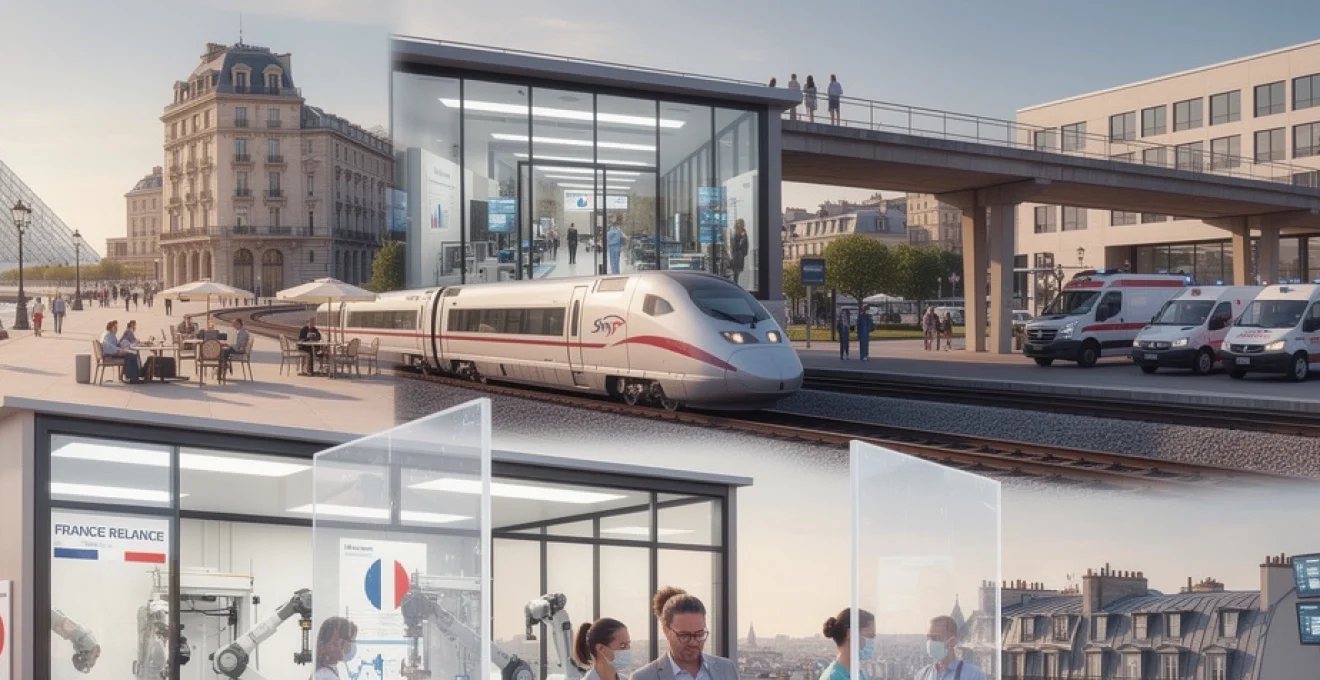
The conclusion of France’s strict confinement measures in December 2020 marked a pivotal moment in the nation’s modern history, fundamentally transforming how French society operates across multiple sectors. This unprecedented period of enforced isolation, which saw mobility restricted and millions confined to their homes, catalysed changes that continue to reshape France’s economic landscape, social fabric, and institutional frameworks. The transition from complete lockdown to a 20:00 curfew system represented more than a simple easing of restrictions—it signalled the beginning of a comprehensive societal adaptation that would redefine French life for years to come.
Economic recovery mechanisms Post-Lockdown france
The French economy emerged from confinement requiring substantial restructuring and innovative recovery strategies. Government intervention became crucial in stabilising sectors that had suffered devastating losses during the lockdown period. Economic resilience became the watchword as businesses adapted to new operational realities, with many discovering that traditional models required fundamental reimagining.
Macron’s france relance recovery plan implementation
President Macron’s comprehensive recovery initiative, totalling €100 billion, represented one of Europe’s most ambitious post-pandemic reconstruction programmes. The plan focused on three primary pillars: ecological transition, competitiveness enhancement, and territorial cohesion. Manufacturing sectors received particular attention, with €35 billion allocated specifically for industrial modernisation and digital transformation initiatives.
The implementation strategy emphasised sustainable development whilst maintaining France’s competitive edge in global markets. Small and medium enterprises (SMEs) benefited from simplified bureaucratic procedures and accelerated funding mechanisms. This approach proved particularly effective in regions like Nouvelle-Aquitaine and Auvergne-Rhône-Alpes, where industrial heritage combined with innovation potential created optimal conditions for rapid recovery.
Tourism sector resurrection in Provence-Alpes-Côte d’azur
The tourism industry faced perhaps the most dramatic transformation, with the Provence-Alpes-Côte d’Azur region serving as a microcosm of nationwide challenges and adaptations. Hotel occupancy rates, which plummeted to 15% during peak confinement, required innovative marketing strategies and service model adjustments to attract domestic visitors initially cautious about travel.
Regional tourism authorities implemented “proximity tourism” campaigns, encouraging French citizens to rediscover local attractions. This strategy proved remarkably successful, with domestic tourism accounting for 78% of visitor numbers in summer 2021, compared to 65% in pre-pandemic years. The shift towards sustainable tourism practices also accelerated, with many establishments adopting eco-friendly operations to appeal to increasingly environmentally conscious travellers.
Hospitality industry adaptation strategies in paris and lyon
Urban hospitality sectors in major metropolitan areas underwent radical operational modifications. Parisian restaurants, constrained by capacity limitations and early curfew requirements, pivoted towards enhanced delivery services and outdoor dining arrangements. The famous terrace culture experienced a renaissance, with municipalities expediting permits for extended outdoor seating areas.
Lyon’s culinary scene demonstrated remarkable adaptability, with traditional bouchons implementing hybrid service models combining traditional dining with innovative takeaway options. Many establishments invested heavily in digital ordering systems and contactless payment technologies, fundamentally altering customer interaction patterns. These adaptations proved so successful that many remained permanent features even after restrictions lifted.
Manufacturing sector digital transformation initiatives
French manufacturing experienced accelerated digitalisation during the recovery period, with Industry 4.0 technologies becoming essential rather than optional. Automation investments increased by 34% compared to pre-pandemic levels, as companies sought to reduce dependency on large workforce concentrations whilst maintaining productivity levels.
The automotive sector, centred in regions like Grand Est and Hauts-de-France, embraced advanced robotics and artificial intelligence systems. Renault and Peugeot implemented comprehensive digital twin technologies, enabling remote monitoring and predictive maintenance capabilities. These innovations proved crucial when intermittent lockdowns threatened production continuity. The integration of IoT sensors and cloud-based analytics became standard practice across manufacturing facilities.
Labour market restructuring and remote work revolution
The transition from confinement
The transition from confinement accelerated deep changes in the French labour market, with remote work emerging from a temporary emergency measure into a lasting structural shift. Employers, employees and legislators all had to rethink where, when and how work is performed. This labour market restructuring in post-lockdown France raised complex questions: how do you protect workers’ rights when they are no longer physically present in the office, and how can companies maintain productivity and cohesion when teams are dispersed across the country?
Télétravail legislation changes under code du travail
Before the pandemic, télétravail existed in the Code du Travail but was rarely used at scale. Post-confinement, France moved rapidly to clarify and strengthen the legal framework, turning ad hoc arrangements into more formalised rights and obligations. The Ministry of Labour issued detailed protocols on health and safety, working time and the right to disconnect, insisting that remote employees must benefit from the same protections as on-site staff. Employers were encouraged to negotiate company-level agreements on télétravail to avoid a patchwork of informal practices.
From 2021 onwards, many sector-level agreements integrated permanent provisions on remote work, specifying eligible roles, days at home, and equipment obligations. The Conseil d’État and labour courts also began to build case law around accidents at home, psychosocial risks and surveillance tools, testing how far traditional rules could stretch in a digital context. For HR departments, télétravail legislation changes turned into a complex compliance puzzle, forcing them to review internal policies on data protection, monitoring and ergonomics. The shift revealed a central tension: how do you preserve flexibility for employers while guaranteeing predictability and security for employees?
Employment contract modifications for hybrid working models
As temporary télétravail agreements gave way to long-term hybrid working models, employment contracts themselves came under scrutiny. Many companies opted to add remote work addenda specifying the number of télétravail days, core working hours, and performance expectations. In some cases, mobility clauses were reinterpreted to cover home-based work outside the original office location, raising questions about tax residency and regional labour regulations. Legal advisers increasingly recommended clear written frameworks to limit disputes around availability and workload.
Hybrid models also influenced remuneration policies and benefits packages. Some employers reconsidered transport allowances or meal vouchers when staff were no longer commuting daily, while others offered lump-sum reimbursements for home office equipment and internet costs. This rebalancing often became a negotiation topic with staff representatives and unions, who sought to ensure that savings made on office space were not simply absorbed by companies. For employees, understanding the fine print of new contract clauses became essential: were télétravail days a right, a privilege, or a management prerogative that could be withdrawn in future crises?
Skills retraining programmes through pôle emploi
The end of confinement exposed sharp divides in the labour market between sectors able to pivot to digital work and those left vulnerable by structural shifts. In response, Pôle Emploi expanded its retraining and upskilling programmes, channelling funds from national and regional recovery plans into priority sectors such as healthcare support, logistics, green technologies and digital services. Initiatives like Transitions Collectives were designed to help employees in declining industries move into growing fields without falling into unemployment.
Digital literacy training became a core focus, as remote job searching, online interviews and virtual onboarding became the new norm. Many jobseekers were offered modules in basic coding, data analysis or e-commerce operations to improve their employability in a more digitised economy. At the same time, Pôle Emploi partnered with private training providers and universities to create short, intensive courses—sometimes just a few months long—leading to recognised certifications. For workers considering a career pivot after confinement, these programmes functioned like a bridge across a turbulent employment river, providing both financial support and structured guidance.
Gig economy expansion via uber and deliveroo platforms
While formal employment structures were being renegotiated, the gig economy in France experienced a marked expansion. Platforms such as Uber, Deliveroo and their French competitors saw increased demand during and after confinement, especially in urban centres where food delivery and ride-hailing offered flexible income sources. For some workers, platform work acted as a stopgap measure after redundancy or furlough schemes ended, while for others it became a semi-permanent complement to part-time contracts. The result was a more fragmented labour market, with traditional CDI contracts coexisting uneasily alongside algorithm-managed micro-jobs.
This growth also intensified debates about worker status and social protection. Court rulings in France and across Europe began to challenge the pure self-employed model, suggesting that some platform workers might more closely resemble employees in practice. Policymakers faced a delicate balancing act: how to maintain the flexibility that attracted many to gig work while ensuring minimum income security and access to health and unemployment benefits. For individuals considering gig work as part of their post-confinement income strategy, understanding these regulatory shifts—and the risks of over-reliance on a single platform—became crucial.
Healthcare system transformation following COVID-19
The end of confinement did not signal an end to pressure on France’s healthcare system; rather, it marked the beginning of a profound transformation. Hospitals, clinics and public health agencies used lessons from the crisis to rethink capacity planning, data systems and community care. The Ségur de la Santé reforms, announced in mid-2020 and implemented progressively thereafter, injected billions of euros into hospital infrastructure, staff salaries and digital health tools. These investments aimed to restore trust among exhausted healthcare workers and rebuild resilience for future health emergencies.
One of the most visible changes was the mainstreaming of telemedicine. Consultations by video or telephone, initially authorised on an exceptional basis, became integrated into routine care pathways, particularly for chronic disease management and mental health support. Patients in rural areas or with limited mobility gained new access channels to specialists in major cities, reducing the need for long journeys. At the same time, national platforms like SI-DEP and Contact Covid improved epidemiological surveillance, enabling faster detection of clusters and more targeted public health responses. Yet these digital advances also raised concerns about data privacy, interoperability and the digital divide for older or less connected populations.
Primary care networks, including médecins généralistes, pharmacies and home-care services, were reinforced to avoid hospitals becoming the automatic first line of defence in future waves. Vaccination campaigns demonstrated how local actors, mayors and civil society organisations could mobilise quickly when supported by clear national guidance. Experts also called for clearer crisis communication structures, arguing for a more visible “Chief Medical Officer” role to centralise scientific messaging during health emergencies. For citizens, the transformation of the French healthcare system after COVID-19 translated into a more hybrid model of care—part digital, part face-to-face—where prevention and information sharing became as important as hospital capacity.
Social behaviour modifications in post-confinement society
Beyond institutions and markets, the end of confinement reshaped everyday social behaviours in France in subtle but durable ways. Habits formed under strict restrictions—avoiding crowds, planning outings carefully, reassessing travel priorities—did not disappear overnight when curfews lifted. Many people reported a lingering caution in social interactions, a heightened awareness of personal space, and a new appreciation for local neighbourhood life. At the same time, there was a strong desire to reconnect with cultural spaces, friends and extended family, sometimes creating tension between health prudence and social hunger.
Cultural venue attendance patterns at louvre and musée d’orsay
Major cultural institutions like the Louvre and Musée d’Orsay became barometers of post-confinement social confidence. When they reopened under strict health protocols—limited visitor numbers, mandatory masks, timed tickets—attendance initially remained below pre-pandemic levels. International tourism, a key driver for these museums, recovered slowly, forcing them to pivot towards domestic audiences and more local outreach. Special exhibitions and extended opening hours were used to spread visits across the week and avoid peak-time crowding.
Interestingly, the visitor profile began to shift: families from the Paris region and other parts of France, who might previously have deferred such visits to “another time”, now seized the opportunity to explore cultural heritage with fewer queues. Digital innovations such as virtual tours and online curatorial talks, developed during confinement, remained in place as complementary experiences. These hybrid cultural consumption patterns raised an important question: would the post-confinement museum experience ever fully return to the pre-crisis model, or had a new equilibrium between physical and digital attendance emerged for the long term?
Retail consumer habits shift towards e-commerce platforms
Confinement acted as a catalyst for a massive shift towards e-commerce in France, and this trend did not reverse once shops reopened. Consumers who had previously been reluctant to buy groceries, clothing or electronics online discovered the convenience of home delivery and click-and-collect services. Large marketplaces and supermarket chains invested heavily in logistics, last-mile delivery and user-friendly apps to capture this surge in digital demand. For many households, weekly online shopping became a new habit rather than a temporary workaround.
Brick-and-mortar retailers, especially small independents, faced a stark choice: adapt to an omnichannel model or risk becoming marginalised. Many launched simple e-commerce sites, partnered with local delivery platforms, or used social media to maintain direct relationships with customers. While this digital pivot offered new revenue streams, it also required investments in technology, photography, packaging and customer service that not all businesses could afford. As a shopper in post-confinement France, you were increasingly navigating a blended retail landscape, where the line between physical and online store was as blurred as the boundary between office and home.
Public transport usage decline on RATP and SNCF networks
Public transport systems, particularly the RATP in the Paris region and SNCF’s national rail network, experienced a significant decline in ridership during and after confinement. Even as restrictions eased, many commuters continued to avoid crowded trains and metros, either because they were working from home or because they preferred individual modes of transport such as bikes, scooters or cars. Peak-hour traffic patterns flattened as hybrid working models reduced daily commuting, challenging decades-old assumptions about capacity planning and timetable design.
To rebuild confidence, operators implemented rigorous cleaning regimes, enhanced ventilation and real-time crowding information via mobile apps. Promotional fares and flexible season tickets were introduced to attract occasional travellers and teleworkers who no longer needed a traditional monthly pass. Yet the financial impact of reduced ticket revenue, combined with ongoing investment in infrastructure projects like Grand Paris Express, created long-term budgetary pressures. From a user perspective, the post-confinement period demanded more planning: checking whether a train would be crowded, considering alternative routes, or even questioning whether the trip was necessary at all.
Educational sector digital infrastructure overhaul
The abrupt switch to distance learning during confinement exposed major weaknesses in the digital infrastructure of France’s educational system. Unequal access to devices, patchy connectivity and limited training for teachers all contributed to learning gaps, particularly among disadvantaged students. In response, the post-confinement period saw a coordinated push by the Ministry of Education, regional authorities and school networks to upgrade hardware, software and digital pedagogy. Investment plans targeted both primary and secondary schools, as well as universities and vocational institutions, recognising that digital learning would remain a permanent component of education.
Schools expanded their use of virtual learning environments, video-conferencing tools and digital textbooks, while also formalising protocols for hybrid teaching in case of future disruptions. Teacher training programmes increasingly included modules on managing online classrooms, designing interactive digital content and assessing students remotely without encouraging cheating. At the same time, policymakers stressed that screens could not fully replace in-person socialisation and hands-on activities, especially for younger children. The goal was not to create a purely virtual school, but to build a more resilient and flexible system where digital tools complemented, rather than supplanted, traditional classroom interactions.
Urban planning adaptations in metropolitan france
Confinement acted like an x-ray for French cities, revealing both strengths and vulnerabilities in urban design. Limited access to green spaces, overcrowded public transport and dependence on central business districts all came under scrutiny. In the post-confinement period, urban planners and local authorities began reimagining streets, parks and neighbourhoods with a focus on proximity, resilience and quality of life. The concept of the “15-minute city”—where residents can access most daily needs within a short walk or bike ride—gained traction in municipalities across metropolitan France.
Cycling infrastructure development in bordeaux and strasbourg
Few changes were as visible as the rapid development of cycling infrastructure, notably in cities like Bordeaux and Strasbourg. Temporary “corona pistes” created during confinement to relieve pressure on public transport were gradually transformed into permanent bike lanes. Municipalities invested in protected cycle paths, secure bike parking and public awareness campaigns to encourage a modal shift away from cars. In Bordeaux, new routes linking residential districts to employment zones allowed more residents to consider cycling as a daily commuting option rather than a weekend leisure activity.
Strasbourg, already a pioneer of cycling culture in France, used the post-confinement period to densify its network and improve intermodality with trams and regional trains. Employers were encouraged to offer bike allowances and changing facilities, recognising the health and environmental benefits of active mobility. For many urban dwellers, the bicycle became emblematic of post-confinement freedom: a way to move independently, avoid crowds and rediscover the city at a human pace. Yet the rapid reallocation of road space also sparked debates with motorists and shop owners, illustrating how every metre of asphalt reflects competing visions of urban life.
Green space expansion projects in Île-de-France region
The experience of being confined in small apartments with limited outdoor access highlighted the vital role of parks and nature in mental and physical well-being. In the Île-de-France region, authorities accelerated green space expansion projects, from transforming disused rail yards into urban forests to converting portions of car-dominated quays into pedestrian promenades. Initiatives such as planting micro-forests and creating pocket parks in dense neighbourhoods aimed to ensure that no resident was more than a short walk away from a patch of greenery.
These projects were not only about aesthetics; they formed part of a broader climate adaptation strategy, helping to combat heat islands and improve air quality. Community gardens and shared allotments gained popularity, offering residents a chance to cultivate food, meet neighbours and reconnect with seasonal rhythms. In a sense, post-confinement France started to treat green spaces as critical infrastructure, on par with roads and sewers, rather than optional amenities. For families considering where to live, proximity to parks and trees became a decisive factor, reshaping housing demand patterns across the region.
Smart city technologies integration in nice and montpellier
Digital tools also played a growing role in how French cities managed the post-confinement transition. In Nice and Montpellier, smart city technologies were integrated to monitor mobility flows, optimise energy use and improve public services. Sensors and data platforms helped track pedestrian and vehicle traffic in real time, enabling dynamic adjustments to traffic lights, pedestrian crossings and public transport frequencies. During periods of renewed health restrictions, these systems could also support crowd management in busy areas such as seafronts, markets and shopping streets.
Municipal apps offered residents a single interface to access services ranging from parking and bike-sharing to reporting issues or receiving emergency alerts. However, the spread of smart city solutions raised valid concerns about surveillance, data ownership and digital exclusion. Who controls the data collected in public spaces, and how is it used? To maintain public trust, cities had to communicate transparently about their objectives and governance frameworks, ensuring that technology served citizens rather than the reverse. In this evolving landscape, post-confinement urban life increasingly resembled a complex operating system, where hardware (streets, buildings) and software (apps, algorithms) had to function in harmony.
Housing market dynamics in rural migration patterns
Perhaps one of the most surprising legacies of confinement was its impact on residential choices. Remote work and the desire for more space prompted many households to reconsider life in dense urban centres, fuelling renewed interest in smaller towns and rural areas. Departments such as Dordogne, Corrèze or parts of Brittany saw rising demand from city dwellers seeking gardens, home offices and a slower pace of life. This “rural migration” was not a mass exodus, but it was significant enough to influence local housing markets, pushing up prices in some previously stagnant zones.
For rural communities, the arrival of new residents brought both opportunities and challenges. On the one hand, it injected fresh economic activity, supported local shops and schools, and sometimes encouraged the reopening of services that had been in decline. On the other hand, it risked creating tensions around affordability for long-standing locals, particularly where second homes competed with primary residences. Whether this shift would endure beyond the immediate pandemic period depended on the stability of remote work arrangements and the capacity of regions to provide reliable digital connectivity, healthcare and education. In many ways, post-confinement France found itself renegotiating the traditional city–countryside divide, with new hybrid lifestyles emerging somewhere in between.