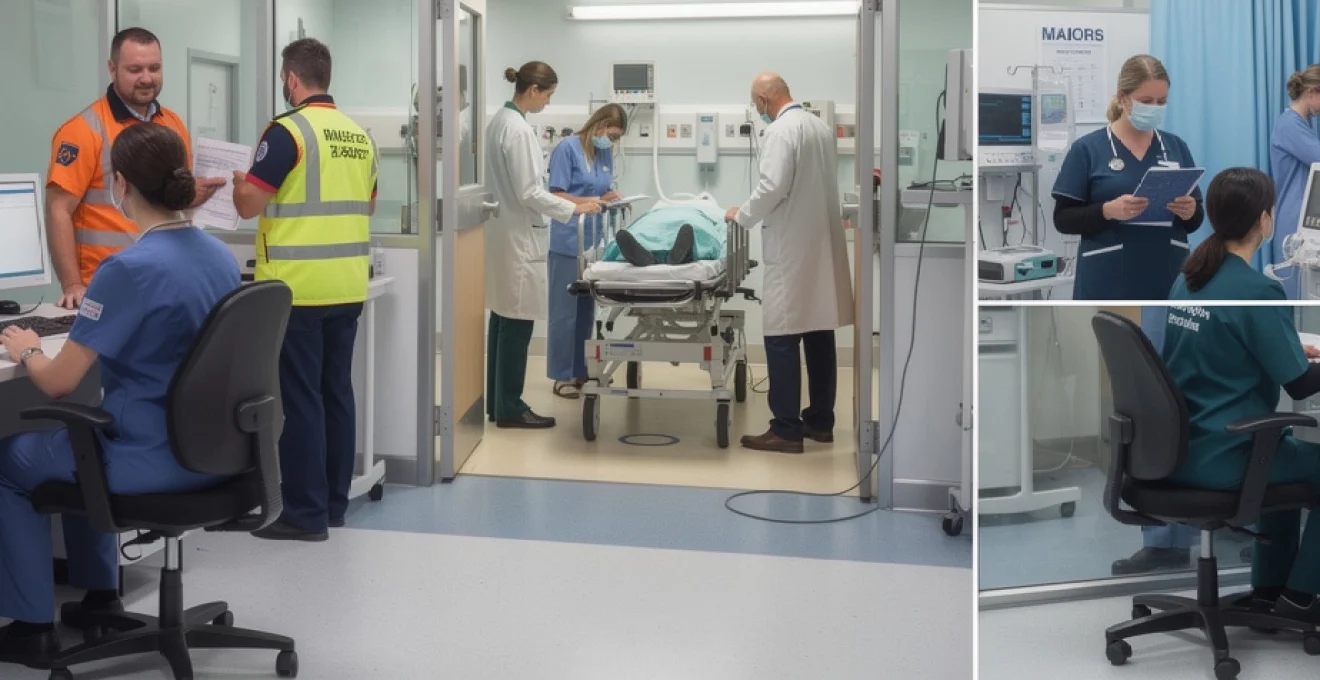
Emergency services form the critical backbone of modern hospital systems, operating as the frontline defence against medical crises and life-threatening situations. These specialised departments handle over 110 million urgent calls and visits annually across healthcare networks, demonstrating their indispensable role in maintaining population health. Hospital emergency services encompass far more than the traditional accident and emergency department, integrating sophisticated trauma centres, critical care units, and specialised response teams that work seamlessly to deliver rapid, life-saving interventions. The complexity of modern emergency medicine requires precise coordination between multiple departments, advanced diagnostic capabilities, and highly trained medical professionals who can make split-second decisions under extreme pressure.
Accident and emergency department structure within NHS foundation trusts
The organisational structure of accident and emergency departments within NHS Foundation Trusts reflects decades of clinical evolution and systematic improvement initiatives. These departments serve as the primary entry point for approximately 25 million patients annually, with major teaching hospitals processing upwards of 100,000 cases each year. The architectural design of modern emergency departments prioritises patient flow efficiency while maintaining clinical safety standards established by regulatory bodies such as the Care Quality Commission.
Contemporary emergency departments operate using a hub-and-spoke model, where central coordination manages patient distribution across specialised treatment areas. This approach enables hospitals to maintain operational efficiency even during peak demand periods, which typically occur between 10:00 AM and 10:00 PM on weekdays. The physical infrastructure includes dedicated zones for different acuity levels, ensuring that critically ill patients receive immediate attention while less urgent cases are managed appropriately without compromising care quality.
Triage systems and manchester triage system implementation
The Manchester Triage System represents the gold standard for emergency department patient prioritisation across UK healthcare facilities. This evidence-based framework categorises patients into five distinct priority levels, from immediate life-threatening conditions requiring intervention within minutes to routine cases that can safely wait several hours. Triage nurses utilise standardised assessment protocols to evaluate presenting complaints, vital signs, and clinical indicators that determine appropriate care pathways and expected waiting times.
Implementation of the Manchester Triage System has demonstrated measurable improvements in patient outcomes, with studies indicating a 15% reduction in mortality rates for high-acuity presentations when proper triage protocols are followed. The system’s effectiveness relies heavily on continuous staff training programmes and regular audit processes that ensure consistent application of triage criteria across different clinical scenarios and patient populations.
Resuscitation bay configuration and advanced life support protocols
Resuscitation bays represent the most technologically advanced areas within emergency departments, equipped with comprehensive monitoring systems, defibrillation equipment, and immediate access to blood products and emergency medications. These specialised treatment areas maintain a 1:1 nurse-to-patient ratio and provide direct access to anaesthetic support services for complex airway management procedures. Modern resuscitation facilities incorporate advanced life support protocols developed by the Resuscitation Council UK, ensuring standardised approaches to cardiac arrest management and major trauma care.
The configuration of resuscitation bays emphasises rapid team deployment capabilities, with colour-coded equipment storage systems and pre-positioned emergency drug trolleys that enable immediate therapeutic interventions. Advanced monitoring capabilities include continuous cardiac rhythm analysis, arterial blood pressure monitoring, and end-tidal carbon dioxide measurement, providing real-time physiological data essential for guiding resuscitation efforts and determining treatment effectiveness.
Majors area patient flow management and royal college guidelines
The majors area encompasses the primary treatment zone for patients requiring bed-based care but not immediate life-saving interventions. This section typically accommodates 60-70% of emergency department admissions, handling complex medical presentations that require detailed assessment, diagnostic testing, and monitoring before disposition decisions can be made. Patient flow management within the majors area follows Royal College of Emergency Medicine guidelines, which emphasise four-hour treatment targets and same-day emergency care pathways for appropriate patients.
Effective majors area management relies on sophisticated patient tracking systems that monitor bed occupancy rates, average length of stay, and discharge planning progress. Senior clinicians conduct regular ward rounds to expedite decision-making processes and identify patients suitable for early discharge or admission to inpatient services, maintaining optimal throughput while ensuring comprehensive clinical assessment and treatment delivery.
<h3
Minors treatment room staffing models and emergency nurse practitioners
The minors area is configured to manage patients with less severe injuries and illnesses who can usually be treated and discharged on the same day. Typical presentations include simple fractures, soft tissue injuries, minor burns, cuts requiring suturing, and uncomplicated infections. By diverting these lower-acuity cases away from resuscitation and majors areas, hospitals preserve critical capacity for the sickest patients and improve overall emergency department efficiency.
Staffing models in minors areas increasingly prioritise Emergency Nurse Practitioners (ENPs) and Advanced Clinical Practitioners, who are trained to assess, diagnose, treat, and discharge patients autonomously within agreed clinical protocols. This nurse-led approach aligns with Royal College of Emergency Medicine and Nursing and Midwifery Council guidance, supporting safe, efficient care while freeing medical staff to focus on complex presentations. Many NHS Foundation Trusts operate extended hours in minors, with rota designs that mirror peak attendance patterns to reduce waiting times and improve patient experience.
Emergency Nurse Practitioners in minors rooms frequently use structured clinical decision tools and evidence-based pathways, for example for suspected ankle fractures, head injuries, or wound management. These pathways help standardise care, reduce unnecessary imaging and admissions, and support consistent documentation for clinical governance. For patients, the experience feels more like a streamlined urgent care service than a traditional A&E visit, reinforcing the broader NHS aim of providing the right care, in the right place, at the right time.
Critical care integration and intensive treatment unit coordination
Seamless integration between emergency services and critical care is fundamental to modern hospital practice. Patients often move rapidly from the ambulance bay or resuscitation area to the Intensive Treatment Unit (ITU) or High Dependency Unit (HDU) when advanced organ support is required. To avoid delays at these critical junctures, NHS Foundation Trusts adopt shared escalation policies, common early warning score systems, and joint training programmes between emergency medicine, anaesthetics, and critical care teams.
Coordination is supported by clearly defined referral pathways, regular multidisciplinary huddles, and joint protocols for time-sensitive emergencies such as sepsis, major trauma, and cardiac arrest. Many hospitals operate “rapid access” or “priority transfer” processes for deteriorating patients in the emergency department, ensuring immediate review by critical care teams. This integrated model not only improves survival but also shortens overall hospital length of stay by enabling early, aggressive treatment when it can have the greatest impact.
High dependency unit patient transfer protocols
High Dependency Units bridge the gap between standard ward care and full intensive care, providing enhanced monitoring and organ support for patients at high risk of deterioration. Transfer from the emergency department to HDU follows structured protocols that specify clinical criteria, staffing requirements, and documentation standards. These protocols typically include stability checks, confirmation of airway and breathing support, and verification that essential investigations and initial treatments have been completed.
Safe transfer relies on a “no loose ends” principle: vital medications, infusion pumps, oxygen supplies, and monitoring equipment must be checked before the patient leaves the emergency area. A designated lead clinician, often from anaesthetics or critical care, assumes responsibility for the transfer and handover, supported by appropriately trained nursing staff. Detailed verbal and written handovers, using tools such as SBAR (Situation, Background, Assessment, Recommendation), help HDU teams quickly understand the clinical trajectory and outstanding tasks.
In many NHS Trusts, audit data show that adherence to HDU transfer protocols reduces adverse events during intra-hospital moves and improves documentation quality. From a patient’s perspective, a well-organised transfer feels like moving through a single, coherent system rather than switching between disconnected departments. For you as a clinician or manager, robust protocols act like a “safety checklist” on a flight deck, minimising risk during one of the most vulnerable phases of emergency care.
Cardiac arrest team response and medical emergency team activation
Within hospitals, emergency services extend beyond the walls of the emergency department through cardiac arrest and Medical Emergency Teams (MET), sometimes known as Rapid Response Teams. These specialist groups provide immediate advanced life support wherever a patient deteriorates, from outpatient clinics to diagnostic areas. Activation criteria are usually triggered by staff concern, abnormal vital signs, or early warning score thresholds, ensuring that patients showing signs of impending collapse receive expert assessment before arrest occurs.
Cardiac arrest calls follow standardised Resuscitation Council UK algorithms, with predefined roles for team members including airway management, chest compressions, drug administration, and documentation. Increasingly, MET calls aim to prevent arrests altogether by intervening when patients first exhibit severe physiological derangement. This proactive model reflects international evidence that early recognition and escalation can halve the incidence of in-hospital cardiac arrest in some settings.
Hospitals support these emergency response systems through simulation training, regular debriefing, and review of response times and outcomes as part of clinical governance. For staff on general wards, knowing that a MET or arrest team can be summoned within minutes provides reassurance and encourages early escalation rather than “watchful waiting”. For patients and families, prompt arrival of a coordinated team during a crisis is one of the most visible demonstrations of how emergency services underpin hospital safety.
Anaesthetic support services and emergency intubation procedures
Anaesthetic services play a pivotal role in hospital emergency care, particularly in supporting emergency airway management, procedural sedation, and transfer to theatre or intensive care. When a critically ill patient in the emergency department requires intubation, a consultant anaesthetist or appropriately trained senior trainee usually leads the procedure, supported by emergency nurses and operating department practitioners. This multidisciplinary approach ensures that complex airway challenges, such as facial trauma or severe obesity, are managed according to best practice.
Emergency intubation procedures are governed by structured protocols that cover pre-oxygenation, drug selection, rapid sequence induction, and post-intubation ventilation strategies. Checklists similar to those used in operating theatres help teams confirm that essential equipment—such as suction, laryngoscopes, bougies, and backup airway devices—is available and functional. Video laryngoscopy, capnography, and continuous haemodynamic monitoring are now standard in most UK emergency departments, reflecting advances in airway safety.
Close collaboration between anaesthetic and emergency medicine teams continues beyond the intubation itself. Decisions about ongoing sedation, transport to CT scanning, and safe transfer to ITU are made jointly, often with real-time input from critical care consultants. You can think of anaesthetic support as the “bridging scaffold” that allows unstable patients to move safely between diagnostic areas and definitive treatment locations without interrupting vital organ support.
Critical care outreach team interventions and early warning scores
Critical Care Outreach Teams (CCOTs) extend the expertise of ITU into the emergency department, wards, and other clinical areas. Their primary function is to identify and support deteriorating patients early, using structured assessment tools and escalation pathways. Outreach nurses and doctors frequently review patients flagged by elevated National Early Warning Scores (NEWS2), which combine respiratory rate, oxygen saturation, blood pressure, pulse, temperature, and level of consciousness into a single risk indicator.
In the emergency department, CCOTs may be alerted when high-risk patients cannot be immediately transferred to critical care due to capacity constraints, or when there is concern about complex comorbidities. Interventions might include optimisation of fluid therapy, adjustment of oxygen delivery, initiation of vasopressor support under protocol, or advice on ceiling of care decisions. Numerous UK studies have linked robust outreach services and consistent use of early warning scores to reductions in unplanned ICU admissions and hospital mortality.
From a systems perspective, early warning scores function like a “smoke alarm” for clinical deterioration, while outreach teams act as the fire brigade—rapidly assessing risks, containing problems, and escalating when necessary. For you as a patient or relative, this means that subtle signs of worsening illness are less likely to be missed, even during busy periods. For hospitals, integrated outreach services provide a crucial safety net between emergency services and routine ward-based care.
Specialised emergency response teams and departmental liaison
Beyond core emergency and critical care functions, many hospitals operate specialised emergency response teams that liaise closely with departmental services across the organisation. Examples include stroke thrombolysis teams, sepsis response groups, obstetric emergency teams, and mental health crisis teams. These groups are activated when specific time-critical conditions are suspected, ensuring that expert assessment and treatment are available without delay.
Effective liaison depends on clear referral criteria, shared communication tools, and predefined responsibilities for each team. For instance, a suspected stroke might trigger a joint response from the emergency department, radiology, and neurology within minutes, with protocols specifying door-to-CT and door-to-needle targets. Similarly, mental health liaison services work alongside emergency clinicians to manage patients in acute psychological crisis, balancing immediate safety with longer-term care planning and community follow-up.
Hospitals also develop joint operating procedures between emergency services and departments such as paediatrics, surgery, and maternity to manage complex cross-specialty emergencies. Regular multidisciplinary meetings, morbidity and mortality reviews, and joint simulation exercises help iron out practical difficulties before real-life incidents occur. When these liaison arrangements work well, patients experience a coordinated “team of teams” approach rather than being passed from one department to another.
Trauma centre operations and major incident response protocols
Trauma centres represent one of the most visible intersections between hospital emergency services and wider regional networks. In England, the establishment of Major Trauma Centres (MTCs) and associated Trauma Units has markedly improved outcomes for patients with severe injuries. These centres are designed to deliver rapid access to specialist surgeons, neurosurgeons, interventional radiologists, and critical care resources, all coordinated through a single emergency care hub.
Major incident response protocols provide the framework for scaling up these capabilities when multiple casualties arrive simultaneously, such as after road traffic collisions, industrial accidents, or terrorist events. The same principles—clear command structures, standardised communication, and rehearsed clinical pathways—apply whether the incident involves two patients or two hundred. For hospitals, the challenge is to maintain routine emergency services while simultaneously managing a surge of high-acuity trauma cases.
Major trauma centre designation and regional trauma networks
Major Trauma Centre designation is awarded to hospitals that meet strict criteria around staffing, infrastructure, and 24/7 specialist availability. This includes immediate access to CT scanning, operating theatres, blood bank services, and consultant-led trauma teams. Regional trauma networks connect MTCs with Trauma Units and local emergency departments, ensuring that patients are transported to the most appropriate facility based on their injuries rather than geographic proximity alone.
Pre-hospital emergency services play a crucial role in this system, using triage tools and clinical judgment to decide whether to bypass closer hospitals in favour of an MTC. Once a major trauma call is activated, the receiving centre mobilises a multidisciplinary trauma team—including emergency physicians, anaesthetists, surgeons, radiologists, and senior nurses—to meet the patient on arrival. Data from UK trauma registries demonstrate significant improvements in survival for severely injured patients since regionalisation was introduced.
For staff, working within a trauma network feels like being part of a highly coordinated relay team: paramedics, emergency clinicians, surgeons, and intensive care specialists each have a defined segment of the patient’s journey. For patients and families, this model increases the likelihood that complex injuries are treated in centres with both the volume and expertise needed to deliver the best outcomes.
METHANE reporting systems and emergency planning resilience
During major incidents, clear and consistent communication is vital. The METHANE reporting framework—Major incident declared, Exact location, Type of incident, Hazards, Access, Number of casualties, and Emergency services present—provides a structured way for pre-hospital teams to relay essential information to hospitals and control centres. This concise format helps receiving hospitals anticipate the scale and nature of the response required, from opening additional resuscitation bays to recalling off-duty staff.
METHANE reports are usually transmitted by radio or digital communication systems and form part of broader emergency planning arrangements overseen by NHS England and local resilience forums. Hospitals integrate these reports into their internal command structures, enabling clinical and managerial leaders to make rapid decisions about capacity, resource allocation, and patient distribution. Regular table-top exercises and live simulations test these arrangements, identifying potential weaknesses before real events occur.
Think of METHANE as the “scene-setting” paragraph of a story that has not yet fully unfolded: it doesn’t contain every detail, but it gives enough context for hospitals to start preparing intelligently. By standardising this initial communication, emergency services reduce confusion and duplication, supporting a more resilient and coordinated response when it matters most.
Multi-agency response coordination with police and fire services
Major incidents rarely involve health services alone. Police, fire and rescue, and local authorities all play central roles in managing hazards, preserving life, and restoring normality. Hospital emergency services must therefore align their plans with those of partner agencies, following national guidance such as the Joint Emergency Services Interoperability Principles (JESIP). These principles emphasise shared situational awareness, joint decision-making, and co-located command structures where possible.
Within hospitals, liaison officers from police and fire services may attend control rooms or incident coordination centres during large-scale events. This facilitates real-time updates about casualty numbers, decontamination needs, scene safety, and forensic considerations. Clear agreements about information sharing, media handling, and family liaison help avoid mixed messages and support sensitive management of relatives seeking news about loved ones.
For clinicians, understanding the constraints and priorities of other emergency services helps frame realistic expectations—for example, why scene safety checks may delay patient extraction, or why certain areas remain inaccessible. For communities, visible cooperation between ambulance, police, fire, and hospital teams reinforces confidence that public safety is being managed in a coordinated and professional manner.
Hospital emergency liaison team activation procedures
Within each hospital, the Hospital Emergency Liaison Team (HELT) or equivalent command group coordinates the internal response to major incidents. Activation procedures are typically triggered by a formal major incident declaration from ambulance control, police, or NHS regional teams. Once activated, the HELT establishes a clear command structure, often using a gold (strategic), silver (tactical), and bronze (operational) framework to delegate responsibilities.
Key tasks include assessing current bed capacity, cancelling non-urgent elective activity, mobilising additional staff, and coordinating with departments such as theatres, radiology, pathology, and critical care. Communication channels are opened with external partners, including other local hospitals, community services, and NHS England incident control centres. Situation reports are generated at regular intervals to track patient numbers, resource usage, and emerging challenges.
Staff across the organisation are informed through predefined alert systems, which may include bleep cascades, SMS messages, or digital dashboards. From your point of view as a patient or visitor, this might look like a rapid but controlled shift in hospital activity—waiting rooms being reorganised, elective clinics postponed, and an influx of uniformed staff in key areas. Underneath this visible change lies a carefully rehearsed set of procedures designed to ensure that emergency services continue to function safely under exceptional pressure.
Emergency diagnostic services and radiology department integration
Timely access to diagnostic imaging is a cornerstone of effective emergency care. Radiology departments work hand in hand with emergency services to provide rapid X-rays, CT scans, ultrasound, and, where appropriate, MRI for acutely unwell patients. In many NHS hospitals, dedicated “hot reporting” radiologists or on-call consultants are available 24/7 to interpret emergency images and advise on next steps, particularly for conditions such as stroke, major trauma, pulmonary embolism, and ruptured aneurysm.
To minimise delays, emergency departments and radiology services agree clear prioritisation criteria and booking pathways, often supported by electronic order communication systems. Protocols for “straight to CT” pathways in suspected stroke or major trauma bypass traditional queues, recognising that every minute of delay can impact long-term outcomes. Point-of-care ultrasound, performed by trained emergency clinicians, provides an additional layer of rapid diagnostics at the bedside, particularly in trauma, early pregnancy complications, and cardiac arrest.
Integration goes beyond simple access to scanners. Joint governance arrangements cover radiation safety, contrast prescribing, and audit of turnaround times for critical reports. Regular multidisciplinary meetings between emergency physicians, radiologists, and radiographers help refine imaging protocols and reduce unnecessary investigations. You might think of radiology as the “eyes” of the emergency service—without fast, accurate imaging, many critical decisions would be based on best guesses rather than hard evidence.
Quality indicators and clinical governance in emergency medicine
Behind the visible activity of emergency departments lies a comprehensive framework of quality indicators and clinical governance processes. National metrics—such as four-hour standards, time to initial assessment, sepsis treatment times, and unplanned re-attendance rates—provide high-level measures of how well emergency services are functioning. Locally, departments track additional indicators such as time in resuscitation, door-to-needle times for thrombolysis, trauma call-to-theatre intervals, and patient experience scores.
Clinical governance encompasses incident reporting, mortality and morbidity reviews, clinical audit, guideline implementation, and continuous professional development. When adverse events occur, root cause analyses are conducted to identify contributory factors and implement system-level improvements. Learning is shared through teaching sessions, safety briefings, and updates to protocols, ensuring that individual experiences contribute to collective improvement.
Patient and public involvement is increasingly central to emergency medicine governance. Feedback from Friends and Family Tests, patient stories, and complaints is reviewed alongside quantitative data to provide a more complete picture of service quality. For emergency clinicians and managers, this governance work may feel less dramatic than a resuscitation or major incident response, but it is just as vital. It provides the “quiet scaffolding” that allows emergency services to deliver safe, effective, and compassionate care every day, even when the department is under intense pressure.